
Best overall: kitchen grease and residue removal. Best for bathroom buildup: fixture and shower detailing. Best for overlooked dirt: floor edges and corners. This 2026 guide ranks deep-cleaning tasks for Tacoma homes and shows business decision-makers how to adapt the same priorities for commercial spaces served by Pureandcleancleaning.
TL;DR
For the best deep cleaning checklist Tacoma homes need, prioritize kitchens, bathrooms, floor edges, and accessible dust.
Kitchen detailing ranks first for greasy surfaces; bathroom detailing addresses soap residue and fixture buildup.
House cleaning Tacoma requests should identify rooms, surfaces, exclusions, and access before booking.
Commercial cleaning services Tacoma requests should separate shared spaces, occupied workstations, and restricted areas.
Why this matters
A checklist is useful only when it describes actual work. A request to clean the kitchen leaves cabinet interiors, appliance interiors, and stubborn residue open to interpretation; a surface-by-surface list gives you something clear to confirm.
Pureandcleancleaning provides residential house cleaning and commercial janitorial services for Tacoma homes and businesses. Use this guide to organize your request, not as a statement that every listed task comes with every visit. Confirm the agreed scope before booking.
For a home, that means separating everyday tidying from detailed surface cleaning. For a workplace, it means separating janitorial tasks from employee belongings, equipment, and areas that require permission to enter.
What makes the best deep cleaning checklist?
Choose tasks by their purpose, not by how impressive a long checklist looks. These criteria guide the 2026 ranking:
Visible buildup: Prioritize grease, soap residue, dust, and dirt you can identify.
Surface compatibility: Match the cleaning method to the material and its care instructions.
Clear boundaries: Name interiors, exteriors, reachable surfaces, and exclusions separately.
Practical access: Include work that can proceed without unsafe reaching or unplanned furniture moving.
Useful completion checks: Describe what you will inspect at the end, rather than relying on a vague promise.
The ranking favors broadly useful tasks. Your own priorities should change when a particular room, surface, or shared area needs more attention.
Deep-cleaning priorities at a glance for 2026
These 6 task groups form a starting checklist. The order below matches the detailed recommendations, but the right cleaning sequence depends on the room: complete dusty work before finishing the floor.
1. Kitchen detailing
Best for: Grease and food residue
Main focus: Accessible cooking and food-preparation surfaces
Key limitation: Appliance interiors need separate agreement
2. Bathroom detailing
Best for: Soap residue and fixture buildup
Main focus: Showers, sinks, toilets, and surrounding surfaces
Key limitation: Cleaning does not repair damaged grout or finishes
3. Floor edges and corners
Best for: Dirt missed during open-floor cleaning
Main focus: Perimeters, thresholds, and accessible corners
Key limitation: Furniture and floor materials affect access
4. High and low dusting
Best for: Overlooked horizontal surfaces
Main focus: Reachable ledges, trim, and baseboards
Key limitation: Height and fragile objects limit the work
5. Touchpoint detailing
Best for: Frequently handled shared surfaces
Main focus: Handles, switches, and door areas
Key limitation: Cleaning is not automatically disinfection
6. Interior glass detailing
Best for: Visible marks and streaks
Main focus: Mirrors and agreed interior glass
Key limitation: Exterior glass and elevated panes need separate scope
1. Kitchen detailing: best for grease and food residue
Kitchen detailing focuses on residue around cooking, washing, and food preparation. For a home, list counters, backsplashes, sink surfaces, cabinet fronts, and accessible appliance exteriors; request appliance or cabinet interiors separately.
For an office kitchenette or staff breakroom, identify shared counters, tables, sink areas, and appliance exteriors. Decide who removes food and personal containers before work starts so the cleaning request does not turn into a disposal decision.
Kitchen detailing pros:
Gives a clear starting point when cooking surfaces need attention.
Separates surface cleaning from sorting food and belongings.
Applies to residential kitchens and shared staff kitchenettes.
Kitchen detailing cons:
Delicate finishes require material-specific care.
Work behind heavy appliances requires a separate access discussion.
Best for: A home kitchen or workplace kitchenette with visible grease or food residue.
Verdict: Choose kitchen detailing first when cooking residue is your main concern; skip unapproved appliance moving.
2. Bathroom detailing: best for soap residue and fixture buildup
Bathroom detailing puts the focus on shower surfaces, tubs, sinks, toilets, and accessible fixture surrounds. Name shower doors, tracks, grout lines, and cabinet fronts individually if they matter to your request.
Commercial restrooms need equally clear boundaries. Identify fixtures, partitions, dispensers, and accessible floor areas, then agree on how people will use the space during cleaning. Replenishing supplies is a separate responsibility to confirm, not an automatic part of the checklist.
Bathroom detailing pros:
Turns a broad room request into specific surface tasks.
Makes shower tracks and fixture bases harder to overlook.
Helps households and workplaces define completion clearly.
Bathroom detailing cons:
Cleaning cannot repair cracked grout, failed sealant, or worn finishes.
A stain or mark is not enough to identify its cause.
Best for: Bathrooms and workplace restrooms with visible soap residue or buildup around fixtures.
Verdict: Choose bathroom detailing for surface buildup; hold repair work outside the cleaning scope.
3. Floor edges and corners: best for overlooked dirt
Floor-edge cleaning targets the perimeter areas that an open-floor pass can miss. Specify corners, thresholds, reachable areas beneath furniture, and the boundary between the floor and baseboards.
At home, clear shoes, baskets, and loose items from the agreed areas. In a business, identify chair zones, entry areas, and accessible furniture edges, but leave cables, equipment, and workstation contents where they belong unless someone authorizes moving them.
Floor-edge cleaning pros:
Addresses clearly defined areas beyond the center of a room.
Helps you identify access problems before the visit.
Fits both residential rooms and commercial common areas.
Floor-edge cleaning cons:
Heavy furniture can leave sections inaccessible.
Different floor materials need different care methods.
Best for: Rooms where corners, thresholds, or furniture edges need more attention than the open floor.
Verdict: Choose accessible perimeter cleaning; skip moving heavy furniture without an agreed plan.
4. High and low dusting: best for overlooked surfaces
Detailed dusting covers accessible horizontal surfaces beyond the usual tabletop. List ledges, trim, baseboards, reachable shelving, and other surfaces you want included, while identifying fragile finishes and objects that should stay untouched.
For homeowners, this is the point to separate dusting from rearranging ornaments or handling collections. Business managers should distinguish shared shelving and trim from employee desks, paperwork, display items, and equipment.
Detailed dusting pros:
Gives neglected ledges and trim a defined place on the list.
Supports a sensible top-to-bottom cleaning order.
Makes no-touch areas explicit before work begins.
Detailed dusting cons:
High or awkward surfaces need a separate access assessment.
Fragile objects can prevent direct access to a surface.
Best for: Homes and workplaces with dust on reachable ledges, trim, or baseboards.
Verdict: Choose reachable surface dusting; hold elevated or delicate work until access and handling are confirmed.
5. Touchpoint detailing: best for frequently handled surfaces
Touchpoint detailing covers marks and residue on handles, switches, door edges, and similar frequently handled areas. Make a location list rather than asking for every touchpoint without defining what that includes.
At home, focus on the rooms people use most. In a workplace, name shared doors and common-area surfaces, and keep electronics outside the task unless their cleaning method is agreed. Cleaning removes dirt; do not treat a cleaning checklist as a disinfection claim.
Touchpoint detailing pros:
Makes small, frequently handled surfaces explicit.
Works across homes, offices, and shared facilities.
Helps distinguish ordinary surfaces from sensitive equipment.
Touchpoint detailing cons:
Electrical components need careful handling.
Cleaning alone does not establish a disinfection process.
Best for: Households and workplaces with visible marks around frequently used doors and controls.
Verdict: Choose touchpoint cleaning for residue and marks; skip unsupported health or safety promises.
6. Interior glass detailing: best for visible marks and streaks
Interior glass detailing covers agreed mirrors, interior door glass, and accessible interior panes. Name each surface, especially when a room includes glass partitions, decorative finishes, or areas blocked by furniture.
Homeowners should distinguish mirrors from windows and interior panes from exterior glass. Business managers should identify meeting-room partitions, entrance glass, and occupied rooms that need scheduled access, rather than assuming all glass belongs in the same task.
Interior glass detailing pros:
Creates a visible, easy-to-identify task list.
Separates mirrors, partitions, and window surfaces.
Supports a focused final check for marks.
Interior glass detailing cons:
Elevated panes require a separate access discussion.
Cleaning cannot remove scratches or repair damaged glass.
Best for: Accessible mirrors and interior glass where fingerprints, residue, or streaks are the main concern.
Verdict: Choose clearly identified interior glass; hold exterior or elevated work for separate confirmation.
How these checklist items are ranked
The ranking uses visible buildup, surface compatibility, clear boundaries, practical access, and completion checks. It is a planning order, not a claim that the same room deserves first attention in every property.
For residential cleaning, prioritize the spaces you use and the tasks routine cleaning leaves unfinished. For commercial janitorial work, prioritize shared-space needs alongside access, occupancy, and the boundaries around equipment and employee belongings.
Turn the checklist into a clear service request
Create 2 separate lists: must-do tasks and optional tasks. A homeowner might put shower residue on the first list and cabinet interiors on the second; a business manager might prioritize restrooms while requesting separate confirmation for meeting-room glass.
Use the following sequence to organize a 2026 cleaning request:
List spaces: Name each room, shared area, and restricted area.
Mark priorities: Identify the surfaces and buildup that matter most.
Confirm boundaries: Separate interiors, elevated surfaces, equipment, and furniture moving.
Arrange access: Explain entry, pets, occupants, alarms, and no-entry areas where relevant.
Check completion: Plan 1 final walkthrough against the agreed list.
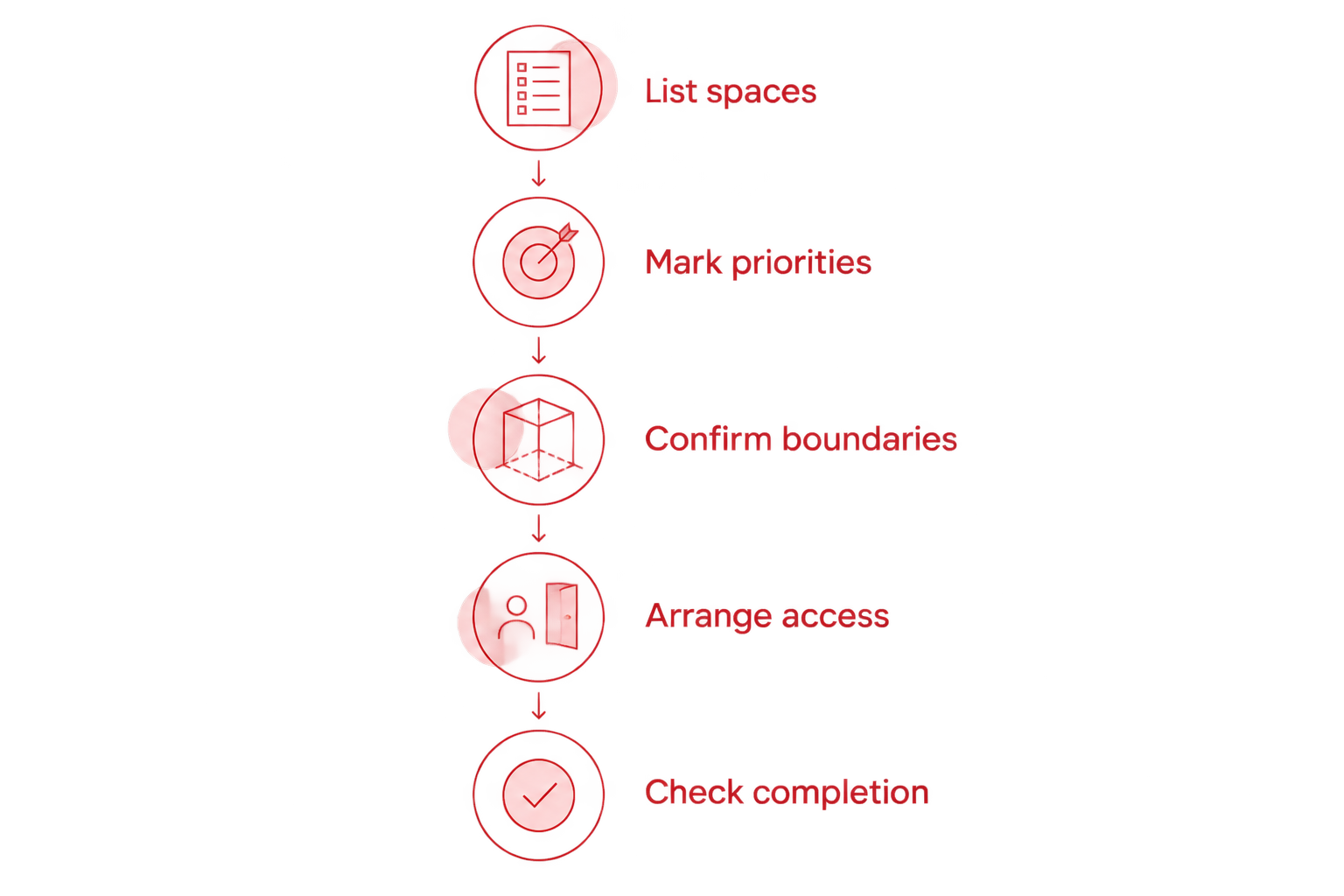
Agree on rooms, priorities, and access before checking the completed work.
For house cleaning Tacoma requests, explain whether the property will be occupied and which belongings you will clear. For commercial cleaning services Tacoma requests, include operating hours, shared-space access, and the person authorized to clarify scope.
Ask Pureandcleancleaning to confirm which requested tasks fit the proposed service. If you require particular products, documentation, or team training, ask directly rather than assuming those details from the words deep cleaning.
Request your cleaning quote
Share your Tacoma property type, priority rooms, surface needs, and access details.
Prepare the space and choose a workable schedule
Before a residential visit, put away private documents, secure valuables, and clear the surfaces you want cleaned. Discuss pets and rooms that should remain closed; leave heavy items in place until responsibility for moving them is confirmed.
Before commercial work, assign a contact person and tell staff which shared areas need to be accessible. Establish how cleaners should handle locked rooms, confidential paperwork, unattended equipment, and interruptions without asking them to make business decisions.
Choose the schedule around actual use and the agreed work. For your 2026 plan, distinguish an initial detailed visit from ongoing cleaning, then confirm what belongs in each; do not assume every detailed task repeats automatically.
Which deep-cleaning tasks should you choose?
Start with kitchen detailing, bathroom detailing, and accessible floor edges when you need a practical default. Add dusting, touchpoints, and interior glass according to what you can identify in the property.
Pureandcleancleaning serves residential and commercial customers, so make the property type explicit when requesting service. A household room list and a workplace access plan answer different questions, even when both include kitchens, restrooms, and floors.
FAQ
What's the best deep cleaning checklist for Tacoma homes?
Start with kitchen residue, bathroom buildup, accessible floor edges, dusting, touchpoints, and interior glass. Specify rooms and surfaces, then confirm which tasks are included before booking.
What's the difference between deep cleaning and regular house cleaning?
A deep-cleaning request identifies detailed surface work beyond the tasks agreed for routine visits. The actual difference depends on the written scope, so name appliance interiors, shower tracks, trim, and other priorities separately.
Does a deep clean include inside the oven and refrigerator?
Do not assume appliance interiors are included. Request each interior separately and confirm preparation, access, and any exclusions before the visit.
How should I prepare my Tacoma home for cleaning?
Clear agreed surfaces, put away private or valuable belongings, and explain access and pet arrangements. Leave heavy furniture and appliances in place unless moving them has been discussed.
Can this checklist work for commercial cleaning services in Tacoma?
Yes, the task groups can help organize shared kitchens, restrooms, floors, and common areas. Add operating hours, restricted areas, equipment boundaries, and an authorized contact person to the request.
Does deep cleaning mean disinfection?
No, a deep-cleaning checklist does not establish that disinfection is included. If disinfection is required, ask about the specific process rather than relying on the service label.
How do I request residential or commercial cleaning from Pureandcleancleaning?
Use a quote request to describe your property, priority spaces, surface concerns, and access requirements. Ask for confirmation of the service scope and preparation before booking.
One last thing
Put exclusions beside the tasks they affect, not at the bottom of the page. A note beside floor-edge cleaning that says heavy furniture stays in place is easier to act on than a general disclaimer detached from the work.
Keep that habit in your 2026 checklist. Clear limits help you request the cleaning you actually want and check the result against the same instructions.