
Best overall: a room-by-room checklist with written completion standards. Best for a focused reset: kitchens and bathrooms. Best for ongoing upkeep: entryways and floors. The best house cleaning checklist Tacoma homeowners can use in 2026 connects each task to a clear result, then separates routine work from extras before booking.
TL;DR
The best house cleaning checklist Tacoma homes need starts with written scope, not an unqualified promise to clean everything.
Prioritize kitchens, bathrooms, and floors; list appliance interiors and detailed work separately.
Pureandcleancleaning serves homeowners and businesses seeking residential cleaning and commercial janitorial services in Tacoma.
For commercial cleaning services Tacoma businesses request, add room access, shared-space priorities, and scheduling instructions.
Why this matters
A checklist gives you something specific to approve before cleaning starts. Without one, a homeowner can expect cabinet interiors while the cleaning team plans to address exterior surfaces only.
Pureandcleancleaning is a fit for Tacoma homeowners and businesses seeking residential cleaning or commercial janitorial services. Start with Pureandcleancleaning, then use the priorities below to explain the work you want discussed. Treat every listed task as a scope question, not an automatic service inclusion.
For a household, the goal is an agreed plan for living spaces. For a business, the same discipline applies to work areas, shared rooms, access, and responsibilities between visits.
What makes the best house cleaning checklist?
Use these criteria to assess your 2026 checklist before deciding how much detail it needs:
Clear scope: Name the room, surface, and task rather than writing only “clean thoroughly.”
Visible completion: Describe an observable result, such as removing loose debris from an accessible floor.
Practical order: Clear access and address higher surfaces before completing floors.
Surface instructions: Identify materials that need particular products or methods, following manufacturer guidance.
Separate extras: Flag appliance interiors, interior windows, and detailed work for discussion.
Repeatable handoff: Record who handles access, supplies, questions, and follow-up.
A longer list does not automatically make a better cleaning plan. The strongest checklist names what matters and makes exclusions just as clear as inclusions.
Checklist priorities at a glance
The ranking below puts agreement first, followed by room tasks and the final handoff. These are checklist priorities, not claims about any provider’s standard package.
1. Written room-by-room scope
Best for: Preventing mismatched expectations
Standout feature: Connects tasks to specific rooms
Key limitation: Needs agreement before the visit
2. Kitchen surfaces
Best for: Food-preparation areas
Standout feature: Separates accessible surfaces from interiors
Key limitation: Does not automatically include appliances inside
3. Bathroom fixtures
Best for: Detailed room planning
Standout feature: Names fixtures individually
Key limitation: Cleaning is not a repair for damaged finishes
4. Entryways and floors
Best for: Recurring upkeep
Standout feature: Links cleaning methods to flooring
Key limitation: Clutter restricts access
5. Dusting and touchpoints
Best for: Finishing accessible surfaces
Standout feature: Identifies reachable areas
Key limitation: Height and fragile objects need discussion
6. Interior glass and details
Best for: Targeted detail work
Standout feature: Makes easily missed tasks explicit
Key limitation: Requires separate scope confirmation
7. Waste and shared spaces
Best for: Homes and workplaces with shared routines
Standout feature: Assigns disposal responsibilities
Key limitation: Restricted waste needs separate arrangements
8. Final walkthrough and handoff
Best for: Closing the visit clearly
Standout feature: Records questions and next steps
Key limitation: Cannot replace an agreed starting scope
1. Written room-by-room scope: best for clear expectations
Begin with the spaces you want cleaned and the work expected in each. For house cleaning Tacoma residents request, distinguish occupied rooms from storage areas and rooms you want left untouched.
For commercial cleaning services Tacoma businesses request, distinguish private offices, shared areas, and restricted rooms. Do not assume the same access rules apply throughout a building.
Scope checklist pros:
Gives both sides a specific task list.
Separates routine work from requested extras.
Records surfaces or belongings that need special instructions.
Scope checklist limitations:
A generic template still needs editing.
An unchecked box does not establish provider acceptance.
Best for: Anyone booking an initial visit or changing an existing arrangement.
Set aside a suggested 10-minute walkthrough to describe the property. Identify 3 priority tasks so your main concerns remain clear if the proposed scope needs adjustment.
Verdict: Keep this first; agree on the work before organizing the visit.
2. Kitchen surfaces: best for a focused kitchen reset
List accessible counters, the sink, appliance exteriors, and the floor as separate questions. Record whether clearing dishes and moving countertop belongings belong to you or the cleaning team.
For an office kitchenette, add shared-table surfaces and identify who handles personal food containers. A workplace kitchen needs its own instructions rather than an unchanged copy of a residential checklist.
Kitchen checklist pros:
Keeps individual surfaces from disappearing under “clean kitchen.”
Makes preparation responsibilities clear.
Separates exterior cleaning from interior detail work.
Kitchen checklist limitations:
Refrigerator and oven interiors need explicit agreement.
Heavy appliances or stored items can restrict access.
Best for: Households prioritizing cooking areas and businesses managing shared kitchenettes.
Before booking in 2026, flag delicate finishes and provide any relevant manufacturer care instructions. Never treat a request to remove buildup as permission to use any product on any surface.
Verdict: Keep accessible kitchen surfaces prominent; confirm interiors separately.
3. Bathroom fixtures: best for a detailed bathroom checklist
Name the toilet, sink, mirror, shower, tub, and floor individually. Specify which bathrooms are included and identify stored belongings that prevent access to ledges or counters.
For business restrooms, clarify whether replenishing supplies is requested and who provides them. Cleaning, supply replenishment, and maintenance are different responsibilities; write each one down rather than bundling them together.
Bathroom checklist pros:
Breaks a broad request into identifiable fixtures.
Makes occupied bathrooms easier to prepare.
Helps separate cleaning concerns from maintenance concerns.
Bathroom checklist limitations:
Damaged caulk or worn finishes need separate assessment.
Fixture cleaning does not establish disinfection or a health outcome.
Best for: Homes with several bathrooms and workplaces with shared restrooms.
Mention surface materials and existing damage before the visit. If a mark remains, ask whether it is removable soil or a surface condition rather than assuming repeated scrubbing is appropriate.
Verdict: Keep fixture-level detail; do not substitute cleaning for repairs.
4. Entryways and floors: best for recurring upkeep
List flooring by room and identify mats, rugs, stairs, and areas beneath movable furnishings. Ask which accessible areas are included and whether furniture movement forms part of the agreed work.
In a business, note entrances and circulation routes alongside occupied work areas. Coordinate cleaning access so the team knows which spaces are in use and which can be addressed during the visit.
Floor checklist pros:
Connects the method to the flooring material.
Identifies access obstacles before arrival.
Gives recurring visits a consistent room list.
Floor checklist limitations:
Loose belongings prevent full access.
Specialty floor care is not implied by ordinary floor cleaning.
Best for: Households maintaining living areas and businesses planning regular shared-space cleaning.
For your 2026 plan, mark any areas that should remain untouched. Include care instructions for flooring or rugs rather than asking the team to infer the material from appearance.
Verdict: Keep floors in the recurring plan; resolve access and material questions first.
5. Dusting and touchpoints: best for accessible surface upkeep
Specify reachable shelves, furniture surfaces, switches, handles, and other agreed touchpoints. State whether the work means dusting, wiping, or another requested method; these terms should not be interchangeable shorthand.
At home, identify fragile decorations and belongings you will move yourself. At work, establish instructions for desks, documents, screens, and personal items rather than treating every occupied surface as available for cleaning.
Surface checklist pros:
Defines what “dusting” covers in each room.
Makes fragile-item instructions visible.
Helps protect the boundary around private belongings.
Surface checklist limitations:
High or obstructed surfaces need separate discussion.
Wiping a touchpoint does not support a disinfection claim.
Best for: Homes with furnished rooms and workplaces with occupied desks.
Use plain instructions such as “leave paperwork untouched” or “clean the cleared shelf only.” Specific boundaries are more useful than asking a team to be careful without explaining what needs attention.
Verdict: Keep accessible surfaces listed; make no-touch areas equally explicit.
6. Interior glass and details: best for targeted finishing work
Create a separate list for interior glass, tracks, baseboards, doors, and other detail tasks you want considered. Their inclusion should be a deliberate agreement, not an assumption attached to the word “thorough.”
For a workplace, identify glass partitions or interior doors by location. For a home, distinguish reachable glass from areas that raise access questions, and explain what you want addressed.
Detail checklist pros:
Gives easily overlooked requests a named place.
Helps distinguish recurring tasks from occasional work.
Lets you prioritize the details you notice most.
Detail checklist limitations:
Access and working-height restrictions need confirmation.
Damaged glass or finishes are not cleaning tasks.
Best for: Homeowners and business managers requesting particular finishing details.
Choose the details that matter to your property rather than copying every possible task. A focused list is easier to review and accept than an open-ended request to address everything visible.
Verdict: Hold detail work outside the routine list until its scope is confirmed.
7. Waste and shared spaces: best for coordinated routines
Identify ordinary waste bins, collection points, and the intended disposal location. Confirm whether replacing liners is requested and who supplies them.
Residential instructions should cover household bins and access to the agreed disposal area. Commercial instructions should also distinguish shared-space waste from documents, restricted materials, or anything requiring separate handling arrangements.
Shared-space checklist pros:
Assigns responsibilities beyond individual rooms.
Makes disposal access part of the plan.
Helps residents or staff understand their own preparation tasks.
Shared-space checklist limitations:
Ordinary cleaning scope does not establish restricted-waste handling.
Unlabelled belongings should not be treated as rubbish.
Best for: Busy households and businesses with shared kitchens, restrooms, or work areas.
For commercial cleaning services Tacoma managers arrange in 2026, name a contact who can answer disposal questions. Do not leave the cleaning team to decide whether an unfamiliar item should be discarded.
Verdict: Keep disposal instructions explicit; exclude uncertain materials until clarified.
8. Final walkthrough and handoff: best for a clear finish
Review the agreed rooms and priorities when the visit concludes, using whatever handoff method has been arranged. Ask about inaccessible areas, unresolved questions, and any tasks that need discussion before another visit.
At home, keep feedback tied to the accepted checklist. At work, assign a contact to collect feedback so the next visit does not depend on conflicting instructions from several people.
Handoff checklist pros:
Keeps feedback specific and actionable.
Records access issues for the next visit.
Creates a place to discuss scope changes.
Handoff checklist limitations:
A walkthrough does not create an unstated guarantee.
New requests still need separate agreement.
Best for: Households and businesses establishing a repeatable cleaning arrangement.
Use the agreed scope as your reference, not a new list assembled after the work. If your needs change, update the next visit’s instructions in writing.
Verdict: Keep the handoff brief, specific, and tied to the original agreement.
Turn the checklist into a booking request
Use this sequence for either a home or a business. A clear request makes your needs easier to discuss without implying that every task is included.
List spaces: Identify the rooms and areas you want considered.
Mark priorities: Name your most important tasks and separate optional details.
Confirm access: Explain entry arrangements, occupied areas, and restrictions.
Agree scope: Request confirmation of tasks and scheduling before booking.
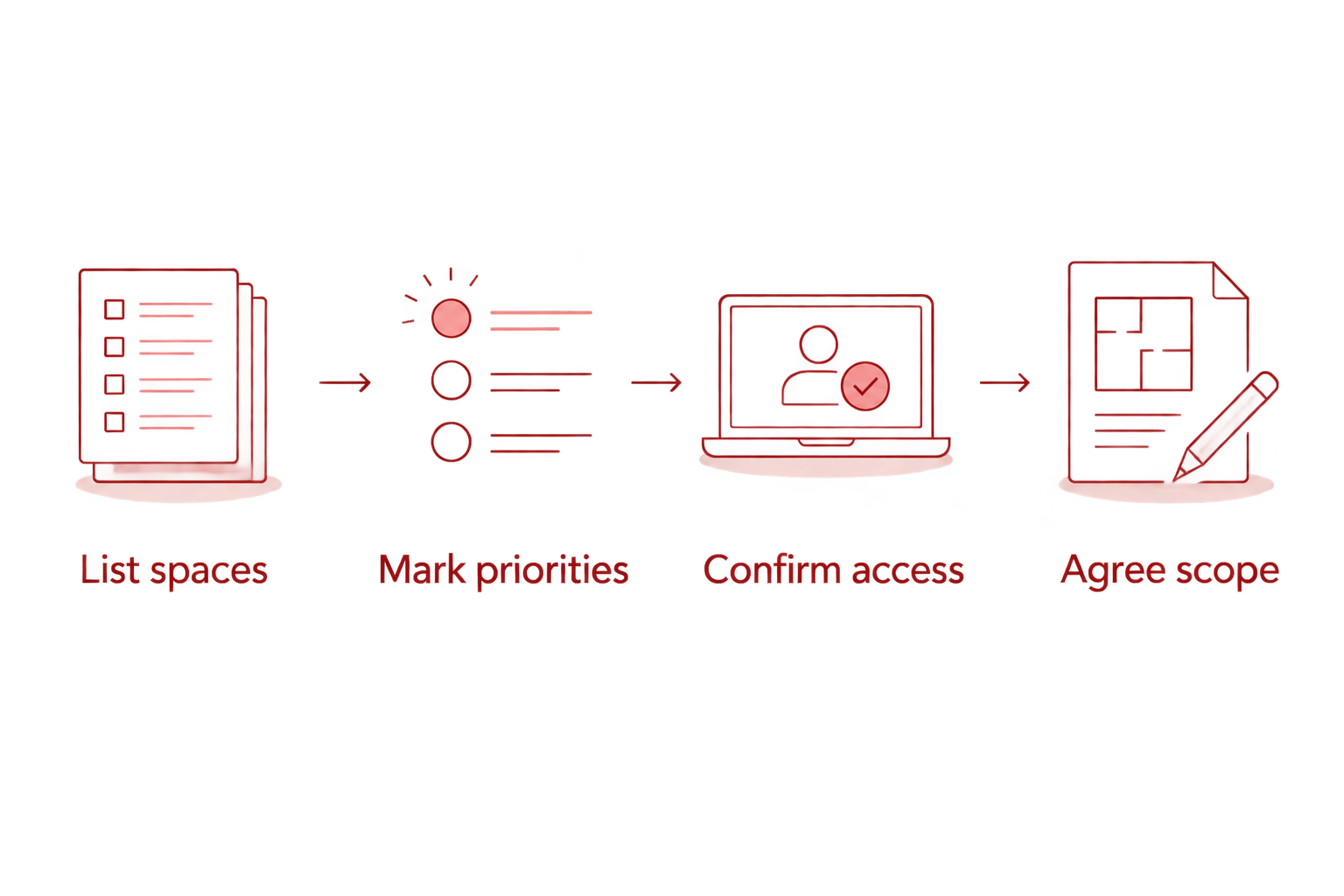
Confirm the work before treating a checklist as a booked service.
For house cleaning Tacoma households arrange, include household access instructions and any rooms to exclude. For commercial cleaning services Tacoma businesses arrange, explain operating hours, restricted areas, and the person authorized to approve changes.
Pureandcleancleaning provides residential cleaning and commercial janitorial services. Describe your property and requested work, then ask which tasks and scheduling arrangements can be agreed.
Request your cleaning quote
Describe your home or business, priority rooms, requested tasks, and preferred schedule.
How these checklist items are ranked
The ranking puts scope before individual tasks because every later decision depends on an agreed assignment. Kitchens, bathrooms, floors, and accessible surfaces follow; detail work, disposal, and handoff complete the plan.
These 2026 recommendations apply the same criteria to residential and commercial requests: clear boundaries, observable completion, practical preparation, and a named next step. They are not a provider scorecard or a claim of hands-on testing.
Which checklist should you choose?
Choose the room-by-room scope checklist as your default, then add the task groups relevant to your property. For a home, build around the living spaces you want addressed; for a business, add shared-space responsibilities and access instructions.
Pureandcleancleaning house cleaning and commercial janitorial inquiries should describe the requested work rather than assume a package includes every item here. Keep routine tasks separate from occasional detail requests.
FAQ
What's the best house cleaning checklist for a Tacoma home?
The best checklist identifies rooms, specific tasks, exclusions, and completion expectations. Prioritize kitchens, bathrooms, and floors, then confirm the requested scope before booking.
Does a house cleaning checklist include oven and refrigerator interiors?
Appliance interiors belong on a separate request unless their inclusion has been confirmed. Listing them on your own checklist does not make them part of a provider's agreed service.
How should I prepare my home before a cleaning visit?
Clear access to the areas you want cleaned and identify belongings that should remain untouched. Confirm entry arrangements and who handles dishes, loose items, or other preparation tasks.
Can a business use the same checklist as a household?
A business can use the same room-by-room structure, but it needs workplace-specific instructions. Add operating hours, restricted spaces, shared-area responsibilities, and an authorized contact.
How often should I schedule cleaning?
Choose a schedule based on room use, your own upkeep, and the work you want assigned. Discuss recurring tasks separately from occasional detail requests before agreeing on visits.
Does wiping handles mean they have been disinfected?
Wiping handles does not establish that they have been disinfected. If disinfection is requested, discuss the method and product instructions separately from ordinary surface cleaning.
How do I request cleaning from Pureandcleancleaning?
Submit a quote request describing your home or business, requested rooms, priority tasks, and preferred schedule. Ask for confirmation of scope and arrangements before treating the visit as booked.
One last thing
Write down what should not be cleaned. A no-touch list for paperwork, fragile objects, restricted rooms, or personal belongings gives your cleaning instructions a clear boundary that a task list alone cannot provide.