
Best overall: written move-out requirements. Best for kitchen handovers: appliance interiors. Best for catching missed work: a final walkthrough. This 2026 guide ranks the best move-out cleaning checklist items for Tacoma renters, with parallel checks for business tenants preparing a commercial space for handover.
TL;DR
Best move-out cleaning checklist Tacoma renters can follow: written requirements first, final walkthrough last.
Match kitchen, bathroom, storage, and floor tasks to your lease and property manager’s instructions.
Pureandcleancleaning provides residential cleaning and commercial janitorial services in Tacoma; confirm your specific handover tasks before booking.
Photograph the finished space, record unresolved issues, and separate cleaning requests from repairs.
Why this matters
A useful move-out checklist tells you what to clean, what needs permission, and what to confirm before returning access. A room-by-room list alone does not establish what your landlord or property manager expects.
Pureandcleancleaning provides residential house cleaning and commercial janitorial services in Tacoma, Seattle, and Pierce County. Pureandcleancleaning serves Tacoma renters seeking house cleaning and businesses seeking commercial janitorial services. For either setting, ask whether the proposed work covers your specific departure checklist.
Treat this 2026 guide as a planning tool, not a replacement for your lease, property instructions, or product care directions. Cleaning does not guarantee a particular inspection result or deposit decision.
What makes the best move-out cleaning checklist
Use these criteria to judge every task before adding it to your booking or personal work list:
Written relevance: The task matches your lease, handover instructions, or an agreed request.
Clear boundaries: Everyone understands the difference between cleaning, repairs, removal, and specialist work.
Surface suitability: The method follows the appliance or finish manufacturer’s directions.
Practical order: Emptying and upper-surface work happen before the final floor pass.
Visible completion: You can inspect the result without moving belongings back into place.
The ranking below prioritizes preparation and distinct handover needs. It does not rank cleaning companies or promise a landlord’s approval.
Move-out checklist priorities at a glance
1. Written requirements
Best for: Defining the job
Standout purpose: Connects tasks to the actual handover
Key limitation: Instructions still need clarification
2. Appliance interiors
Best for: Kitchen handovers
Standout purpose: Addresses spaces hidden during everyday use
Key limitation: Access and appliance-specific directions matter
3. Bathroom surfaces
Best for: Bathroom detail
Standout purpose: Groups fixtures, residue, and edges
Key limitation: Cleaning does not repair damaged finishes
4. Empty storage
Best for: Finding concealed debris
Standout purpose: Exposes shelves, drawers, and cabinet bases
Key limitation: Belongings must be removed first
5. Floors and edges
Best for: Finishing empty rooms
Standout purpose: Covers open areas and accessible boundaries
Key limitation: Specialist floor treatments need separate confirmation
6. Touchpoints and glass
Best for: Final visible details
Standout purpose: Catches marks outside the main work areas
Key limitation: Electrical parts and coatings require care
7. Final walkthrough
Best for: Documenting completion
Standout purpose: Checks the whole space against the agreed list
Key limitation: Documentation does not determine acceptance
1. Written requirements: best for defining the job
Start with the move-out instructions, then convert each requirement into a task you can check. For your 2026 handover, confirm which spaces belong to your responsibility and which need separate arrangements.
For a home, identify rooms, included appliances, storage, and any outdoor areas mentioned in your instructions. For a business, identify leased rooms, shared areas, fixtures, and building access rules. Do not assume a shared lobby belongs on your commercial departure checklist.
If you are arranging cleaning services, send the task list before accepting a scope. Ask about team preparation for the surfaces involved, arrival arrangements, and how unfinished or inaccessible areas will be handled.
Written requirements pros:
Connects the cleaning plan to your actual space.
Makes exclusions visible before work starts.
Gives everyone the same reference during handover.
Written requirements cons:
Vague instructions still require answers.
A written list cannot resolve a disagreement by itself.
Best for: Renters and business tenants who need a defined starting point.
Verdict: Use written requirements first; skip assumptions about what a standard cleaning includes.
2. Appliance interiors: best for kitchen handovers
Check the inside of each appliance included in your responsibilities. Empty removable contents first, then follow the manufacturer’s directions for cleaning accessible surfaces and parts.
For a rental home, consider the refrigerator, oven, microwave, and dishwasher only where present and included in the handover instructions. For a business, apply the same approach to staff kitchen appliances; do not treat commercial food equipment as ordinary breakroom equipment.
Keep the task specific. Refrigerator shelves, drawer compartments, door seals, and accessible oven surfaces are separate checks, not one vague kitchen checkbox. Confirm whether appliance interiors form part of any booked service.
Appliance interiors pros:
Covers areas concealed when doors are closed.
Separates food removal from surface cleaning.
Makes appliance-specific instructions easier to follow.
Appliance interiors cons:
Some parts require a particular cleaning method.
Moving or disconnecting appliances creates a separate access question.
Best for: Residential kitchens and business breakrooms with included appliances.
Verdict: Use an appliance-by-appliance list; skip pulling out heavy equipment without an agreed plan.
3. Bathroom surfaces: best for fixture-level detail
List bathroom fixtures individually rather than writing only bathroom clean. Check the toilet, basin, counter, mirror, shower, and tub where present, including accessible edges and fixture bases.
In a home, remove personal products before inspecting shelves and shower corners. In business restrooms, confirm responsibility for dispensers, partitions, and tenant-installed accessories. Keep building-owned supplies and equipment separate from items your business must remove.
Use cleaning products suitable for each finish and follow their labels. Do not mix cleaning products or treat damaged grout, failed sealant, rust, or chipped surfaces as problems that cleaning alone must solve.
Bathroom surfaces pros:
Turns a broad room label into inspectable tasks.
Draws attention to corners and fixture bases.
Helps distinguish residue from maintenance concerns.
Bathroom surfaces cons:
Damaged materials remain damaged after cleaning.
Tight spaces and fixed fittings limit access.
Best for: Renters and facilities contacts checking bathrooms before handover.
Verdict: Use a fixture-by-fixture check; flag repairs separately instead of repeatedly scrubbing damaged surfaces.
4. Empty storage: best for finding concealed debris
Empty cabinets, drawers, closets, and tenant-controlled storage before cleaning their accessible interiors. Check shelf surfaces, drawer bottoms, cabinet bases, and corners that belongings previously covered.
For house cleaning, this means coordinating packing with access to kitchen cupboards, bathroom cabinets, and closets. For commercial cleaning, clear desks and storage only according to your organization’s instructions; documents, records, and equipment need an authorized removal plan.
Work through 1 room at a time. Mark storage complete only after it is empty, cleaned as required, and checked for anything left behind. Do not remove fixed shelving or hardware unless you have permission and an appropriate plan.
Empty storage pros:
Exposes debris that is difficult to see around belongings.
Helps you find forgotten possessions.
Gives the cleaner access to agreed interior surfaces.
Empty storage cons:
Packing must happen before the cleaning step.
Fixed fittings still restrict access.
Best for: Homes with built-in storage and offices with tenant-controlled cabinets.
Verdict: Use empty-storage checks before the main clean; wait on occupied cabinets rather than marking them complete.
5. Floors and edges: best for finishing empty rooms
Schedule the final floor pass after belongings, packing materials, and cleaning equipment leave the room. Match the cleaning method to the floor material and its care instructions.
In a home, inspect accessible edges, corners, and areas revealed by removed furniture. In a commercial space, separate your leased floor area from shared corridors and identify any finishes or treatments that need a specialist discussion.
Do not assume vacuuming, mopping, carpet extraction, and floor refinishing are interchangeable services. Ask what is included, identify existing damage, and keep repair questions outside the ordinary cleaning checklist.
Floors and edges pros:
Covers areas that furniture previously concealed.
Places the finishing task after mess-producing work.
Encourages a material-specific method.
Floors and edges cons:
Cleaning does not restore every stain or damaged finish.
Specialist treatments require separate scope confirmation.
Best for: Empty rooms ready for the last cleaning pass.
Verdict: Use floor cleaning as a finishing stage; skip unapproved treatments and unsupported stain-removal promises.
6. Touchpoints and glass: best for final visible details
Check accessible door handles, door faces, switches, interior glass, and mirrors for visible marks. These details belong after broader cleaning, when you can inspect them without packing materials in the way.
For residential spaces, include the inside of the entry door and accessible interior window ledges where required. For commercial spaces, check tenant-controlled meeting-room glass, entrance surfaces, and internal doors against building instructions.
Keep liquids away from electrical components and follow surface-care directions. Ask separately about exterior windows, elevated access, adhesive removal, and coated glass rather than assuming they belong in an ordinary visit.
Touchpoints and glass pros:
Catches marks outside the main room checklist.
Makes the entrance part of the final inspection.
Gives interior glass a distinct completion check.
Touchpoints and glass cons:
Coatings and finishes require suitable methods.
Height and access change what work is appropriate.
Best for: The last detail pass through accessible rooms and entrances.
Verdict: Use a careful detail pass; skip spraying electrical fittings or improvising high-access work.
7. Final walkthrough: best for documenting completion
Walk through the empty space with the agreed task list, not just a camera. Open included cupboards and appliances, inspect accessible surfaces, and record anything that remains unresolved.
For a home, separate cleaning observations from missing belongings or repair concerns. For a business, include the authorized handover contact and check access arrangements without recording confidential information in photographs.
Reserve a 15-minute walkthrough appointment as a planning starting point, then allow additional time for your space. Take clear photographs of completed areas and retain the written scope alongside them; neither replaces the property manager’s inspection.
Final walkthrough pros:
Creates a defined check before access is returned.
Keeps incomplete tasks visible.
Connects photographs to the agreed work.
Final walkthrough cons:
Photographs do not show every condition.
Your checklist does not determine the landlord’s decision.
Best for: Anyone ready to hand back an empty residential or commercial space.
Verdict: Use a documented walkthrough; skip promises that photographs guarantee acceptance.
How to organize the cleaning and handover
Use 2 passes: preparation first, cleaning and inspection second. For a 2026 residential move or commercial lease exit, confirm access and responsibilities before settling the schedule.
Define scope: Send the written requirements and identify surfaces needing special care.
Clear belongings: Remove possessions, waste, and equipment through the appropriate arrangements.
Confirm access: Agree on entry, building rules, and the contact for questions.
Inspect completion: Compare the finished space with the agreed list before returning access.
This sequence keeps packing, cleaning, and handover as separate jobs. Do not assume the cleaning team will remove furniture, handle business records, or coordinate repairs unless those tasks are expressly agreed.
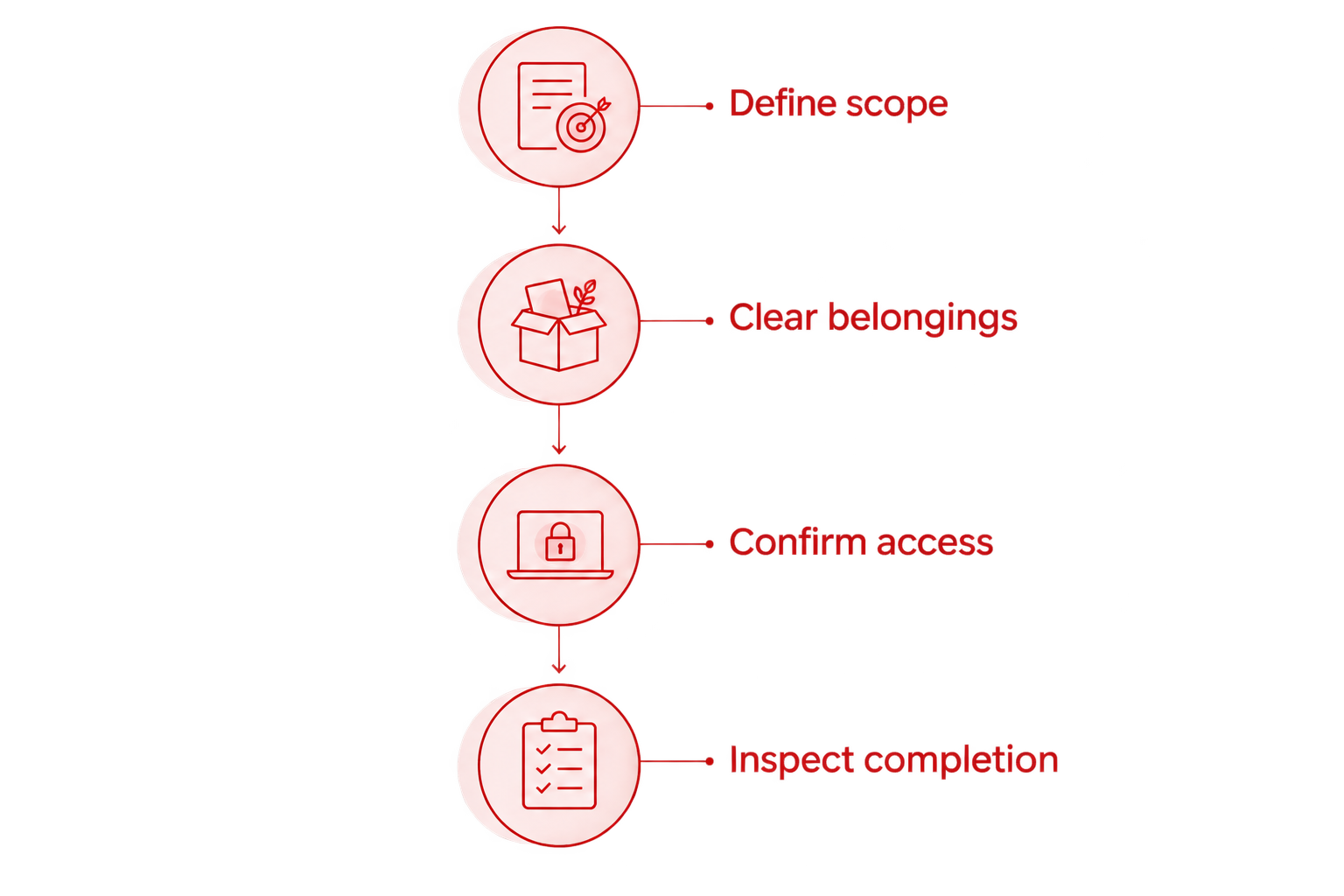
Confirm responsibilities before cleaning, then inspect against the agreed list.
How these checklist items are ranked
Written requirements come first because they define the job. The middle items divide cleaning into inspectable areas; the final walkthrough checks completion. Each item earns its place through relevance, clear boundaries, surface suitability, practical order, and visible completion—not through a claim that every property requires it.
Which move-out checklist should you choose?
Choose the written-requirements checklist as your default, then add only the room and surface tasks that apply. If you are searching for house cleaning Tacoma or commercial cleaning services Tacoma, give the provider that same list and request confirmation of the scope.
Pureandcleancleaning provides both residential and commercial cleaning. Ask whether the team can cover your particular departure requirements, how to prepare the space, and what information is needed to book.
Request your cleaning quote
Share your Tacoma property details, handover requirements, and preferred cleaning date.
FAQ
What's the best move-out cleaning checklist for Tacoma renters?
The best checklist starts with your written move-out requirements and adds tasks for the rooms, appliances, storage, and floors you are responsible for. Finish with a walkthrough against that same list.
Should I clean before or after moving my belongings out?
Plan the main move-out cleaning after removing your belongings. Empty rooms and storage give you access to surfaces that possessions cover.
Does move-out cleaning guarantee my security deposit back?
No, cleaning does not guarantee a deposit outcome. Keep your written instructions, agreed cleaning scope, and completion photographs without treating them as a promise of acceptance.
Are appliance interiors automatically included in house cleaning?
Do not assume appliance interiors are included. Name each appliance and ask the provider to confirm the interior surfaces and parts covered by the proposed work.
Can I use this checklist for an office move?
Yes, use the checklist structure for a commercial handover, but adapt it to your lease and building instructions. Confirm responsibility for shared areas, records, equipment, and tenant-controlled fixtures.
How do I prepare for a booked cleaning visit?
Clear belongings from agreed work areas and confirm access before the visit. Share surface-care instructions, building restrictions, and any tasks that need clarification.
How do I request cleaning from Pureandcleancleaning?
Request a quote with your property location, residential or commercial setting, preferred date, and written task list. Ask which requested tasks are included before confirming the booking.
One last thing
Keep cleaning and repairs on separate lists. For your 2026 handover, describe an unresolved issue plainly rather than adding it repeatedly to the cleaning checklist. A damaged finish needs a different conversation from a surface that still needs wiping.