
Best overall: a kitchen reset. Best for tracked-in mess: an entryway and floor pass. Best for workday interruptions: a trash and recycling check. This 2026 guide ranks practical checklist items for Tacoma households, with matching tasks for readers who also manage a workplace.
TL;DR
The best cleaning checklist busy Tacoma families can follow starts with dishes, counters, and reachable floors.
Give each task a clear stopping point instead of assigning an entire room.
Keep house cleaning and commercial cleaning checklists separate, even when tasks overlap.
Pureandcleancleaning provides residential house cleaning and commercial janitorial services in Tacoma.
Why this matters
A useful checklist tells you what to finish, not just which room looks untidy. “Clean the kitchen” leaves the endpoint open; “wash dishes and wipe the cleared counter” gives you a specific task you can complete or delegate.
Pureandcleancleaning provides residential house cleaning and commercial janitorial services for homes and businesses in Tacoma, Seattle, and Pierce County. Keep the same distinction in your own planning: a family kitchen and a shared workplace breakroom need separate instructions, even when both need attention.
Choose tasks by what the space needs next, not by how satisfying the checkbox looks. A detailed shelf-cleaning session does not replace clearing the counter you need for dinner or emptying a workplace bin that needs attention.
What makes the best cleaning checklist
Use these criteria to build your 2026 routine:
Clear finish: Name the surface or task and describe what counts as done.
Useful priority: Put spaces you need next ahead of less urgent detail work.
Manageable scope: Separate clearing belongings from cleaning surfaces.
Surface compatibility: Follow the surface-care instructions and cleaning-product label.
Clear ownership: Assign a person or service responsibility rather than assuming someone will handle it.
Separate settings: Keep household preferences distinct from workplace access and operating requirements.
For house cleaning in Tacoma, start with the rooms your household uses. For commercial cleaning services in Tacoma, organize the list around shared spaces, staff access, and the work schedule. Do not turn either checklist into an instruction to clean everything on every visit.
Best checklist items at a glance
1. Kitchen reset
Best for: Preparing the next meal
Standout feature: Gives dishes and food-preparation surfaces a defined endpoint
Key limitation: Does not cover appliance interiors
2. Entryway and floor pass
Best for: Managing tracked-in debris
Standout feature: Separates pickup, dry cleaning, and damp cleaning
Key limitation: Requires attention to flooring instructions
3. Bathroom touch-up
Best for: Keeping frequently used fixtures on the list
Standout feature: Names fixtures instead of assigning an entire room
Key limitation: Does not replace detailed bathroom cleaning
4. Trash and recycling check
Best for: Preventing an overlooked end-of-day task
Standout feature: Fits home and workplace closing routines
Key limitation: Requires clear sorting and handling instructions
5. Reachable-surface dusting
Best for: Maintaining shelves and work surfaces
Standout feature: Sets boundaries around belongings and equipment
Key limitation: Does not include high or inaccessible areas
6. Rotating detail task
Best for: Addressing work outside the regular reset
Standout feature: Keeps occasional tasks visible without adding them daily
Key limitation: Needs a separate scope and schedule
1. Kitchen reset: best for preparing the next meal
A kitchen reset means handling dishes, clearing the surface you need, and cleaning that surface according to its care instructions. Keep organizing cupboards and cleaning appliance interiors off this particular checklist item.
At home, name the food-preparation counter and sink rather than writing “all kitchen surfaces.” In a workplace breakroom, identify shared counters and sink areas, then decide who handles dishes and personal food containers.
Kitchen reset pros:
Gives you a specific endpoint before the next meal or break.
Separates cleaning from decisions about where belongings belong.
Works as a household task or a defined breakroom assignment.
Kitchen reset cons:
Cannot start properly while the working surface remains covered.
Leaves cabinet interiors and appliance detail work for another task.
Best for: Families preparing meals at home and business decision-makers assigning shared-breakroom responsibilities.
If you choose a 10-minute planning window, treat it as a limit on the task, not a promise that the whole kitchen will be finished. Stop at the agreed boundary and record unfinished work separately.
Verdict: Start here when the next meal or break needs a usable counter.
2. Entryway and floor pass: best for tracked-in debris
A floor pass starts with moving loose belongings out of the cleaning area. Remove loose debris using a method suited to the flooring, then damp-clean only where the flooring instructions permit it.
For a Tacoma household, define the route from the entrance to the rooms you actually use. For a workplace, identify entrances and shared walking areas without extending the task into storage rooms or occupied workstations by default.
Entryway and floor pass pros:
Gives shoes, bags, and loose objects a separate pickup step.
Lets you prioritize a defined route rather than every room.
Makes flooring-specific instructions part of the checklist.
Entryway and floor pass cons:
Does not address debris beneath furniture you have not agreed to move.
Requires a suitable method for each floor surface.
Best for: Households managing entrance-area mess and workplaces planning cleaning around foot traffic.
For commercial spaces, agree when the area can be cleaned and follow the site's procedures for access and floor-care work. Do not make the checklist an instruction to work around people without a plan.
Verdict: Prioritize the route you need, then expand the task if time allows.
3. Bathroom touch-up: best for frequently used fixtures
A bathroom touch-up names the sink, faucet, mirror, and toilet as separate tasks. Use products according to their labels and follow the care instructions for each surface; never mix cleaning products.
At home, clear personal items from the working area before cleaning. In a workplace restroom, include a check of the supplies the business has agreed to maintain, and identify who handles replenishment.
Bathroom touch-up pros:
Turns a broad room assignment into visible, separate tasks.
Makes it easier to identify a skipped fixture.
Keeps supply checks distinct from surface cleaning.
Bathroom touch-up cons:
Does not include every shower, grout, or cabinet task.
Requires separate instructions for surfaces with different care needs.
Best for: Families sharing bathrooms and businesses managing regularly used restrooms.
A 15-minute planning window can help you decide which fixtures to address during a short session. It is a scheduling choice, not a completion estimate; room condition and the agreed work determine what gets finished.
Verdict: Use a fixture list, not a vague instruction to do the bathroom.
4. Trash and recycling check: best for workday interruptions
A trash and recycling check covers designated bins, sorting instructions, and the agreed collection point. Add liner replacement or bin cleaning only where those tasks belong in the plan.
For families, connect the check to an existing transition, such as finishing the evening kitchen reset. For businesses, assign responsibility for shared bins and clarify whether individual workstation bins are included.
Trash and recycling check pros:
Fits naturally into a closing checklist.
Makes collection responsibilities explicit.
Keeps sorting instructions beside the task that needs them.
Trash and recycling check cons:
Does not replace cleaning a dirty bin.
Needs separate instructions for materials outside ordinary waste handling.
Best for: Busy households and offices that need a clear end-of-day responsibility.
Do not assume every discarded item belongs in the same collection stream. Follow the applicable local disposal instructions, and flag unfamiliar materials rather than adding an improvised handling instruction.
Verdict: Assign this task explicitly instead of leaving it to whoever notices.
5. Reachable-surface dusting: best for shelves and work surfaces
Reachable-surface dusting covers named, accessible surfaces after belongings have been cleared. Specify which shelves, tables, or ledges belong on the list, and follow their care instructions.
At home, decide whether family members move ornaments and papers before the task begins. At work, agree how to handle desks with documents, personal belongings, or equipment; an occupied desk is not automatically a cleared cleaning surface.
Reachable-surface dusting pros:
Gives the task a clear physical boundary.
Separates handling belongings from cleaning furniture.
Lets households and workplaces identify exclusions in advance.
Reachable-surface dusting cons:
Does not cover high ledges or inaccessible areas.
Can remain unfinished when belongings cover the agreed surface.
Best for: Households with open shelves and businesses that can establish a clear-desk boundary.
Write “cleared reception table” rather than “front office.” The narrower instruction tells the person cleaning what to address without inviting decisions about documents or personal property.
Verdict: Include accessible surfaces and name what must stay untouched.
6. Rotating detail task: best for work outside the regular reset
A rotating detail task gives occasional work its own place instead of adding it to every cleaning session. Choose a specific task, such as wiping an accessible baseboard section or cleaning an agreed cabinet interior.
For a home, connect the choice to the room that needs attention. For a business, check access, equipment boundaries, and operational requirements before adding detail work to a regular janitorial list.
Rotating detail task pros:
Keeps occasional work visible.
Prevents the regular checklist from becoming an unlimited assignment.
Creates a clear discussion point when arranging professional cleaning.
Rotating detail task cons:
Does not replace the recurring tasks a space needs.
Requires agreement about access and what is included.
Best for: Families and business decision-makers with a manageable regular routine but unfinished detail work.
A 30-minute planning window is an optional calendar block for this work, not a claim about how long any particular task takes. Choose the task first, then decide whether it fits.
Verdict: Add detail work deliberately, not as an unspoken extra.
Turn the list into a usable routine
Build your 2026 checklist around a short sequence. The same sequence works for a household plan or a workplace cleaning brief, but the actual tasks and responsibilities should remain separate.
Choose priorities: Identify the spaces you need ready for the next activity.
Assign ownership: Name who clears belongings, who cleans, and who checks completion.
Prepare access: Explain entry arrangements and identify areas that stay untouched.
Review scope: Confirm the tasks, exclusions, and preferred schedule.
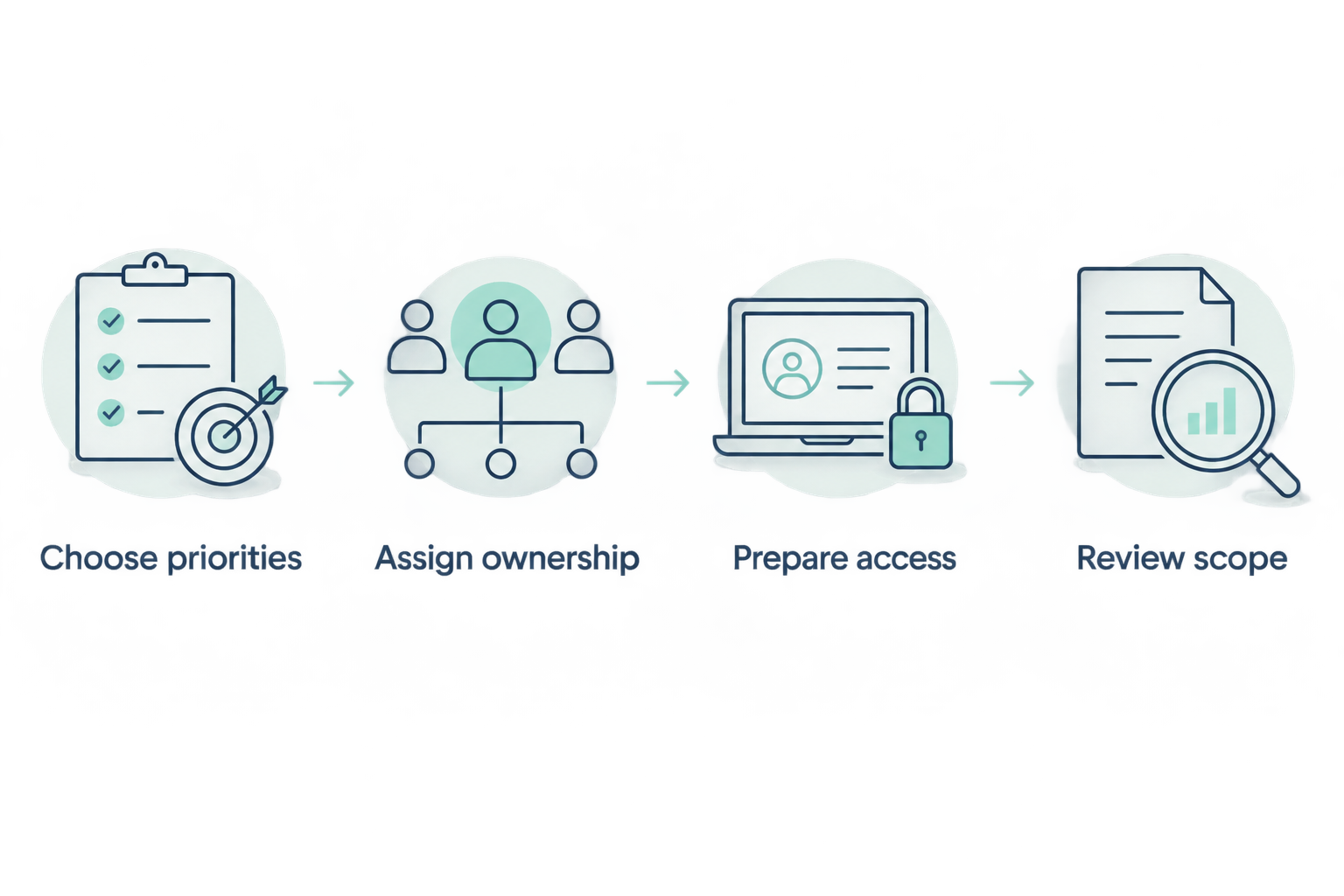
Agree on responsibilities and access before the cleaning session begins.
For a household, preparation can mean putting away personal items and identifying surfaces that need special care. For a workplace, preparation includes naming the person authorized to answer questions and confirming which spaces are accessible during the cleaning window.
Review your 2026 plan when household routines or workplace operating hours change. Keep completed tasks separate from tasks that were inaccessible or outside the agreed scope; those are different outcomes.
Arrange house cleaning or commercial cleaning in Tacoma
Pureandcleancleaning is a fit for Tacoma households and businesses seeking residential house cleaning or commercial janitorial services. Start with the residential and commercial cleaning services, then describe your property and priorities rather than assuming every checklist item is included.
For a residential inquiry, explain which rooms need attention, your preferred schedule, access arrangements, and any surfaces requiring specific care. Ask how the proposed service divides regular cleaning from additional detail work.
For a commercial inquiry, describe the type of workspace, shared facilities, operating hours, and areas that must remain undisturbed. Ask how staffing, team training, access instructions, and task completion are handled; confirm the details that matter to your business before booking.
To discuss a 2026 cleaning schedule, request a quote from Pureandcleancleaning. Include your checklist and ask which tasks fit the proposed service, what preparation is needed, and how to confirm the booking.
How these checklist items were ranked
The ranking prioritizes clear endpoints, everyday usefulness, manageable scope, surface-care requirements, and assignable responsibilities. It is a practical order for choosing tasks, not a measured comparison of cleaning results or completion times.
Kitchen work leads because it prepares a defined surface for the next use. Detail work comes last because it needs a separate decision about scope, rather than silently expanding the regular routine.
Which cleaning checklist should you choose?
Choose the kitchen reset as your default starting point, then add the floor route and bathroom fixtures your household needs. Keep trash checks, reachable-surface dusting, and detail work as explicit assignments rather than implied extras.
For a business, start with the shared areas that need attention and the times they are accessible. Use this ranking to prompt decisions, not to replace a property-specific commercial cleaning plan.
FAQ
What's the best cleaning checklist for busy Tacoma families?
The best cleaning checklist starts with a defined kitchen reset, an entryway and floor pass, and named bathroom fixtures. Add trash checks, reachable-surface dusting, and separate detail tasks according to your household's needs.
Should I clean the whole house every time?
No; define the rooms and tasks for each cleaning session. Keep occasional detail work on a separate list so the regular routine has a clear endpoint.
How do I prepare for house cleaning in Tacoma?
Clear personal belongings from the agreed working areas and explain access arrangements. Identify surfaces requiring special care and confirm which tasks are included before the visit.
Can a business use the same checklist as a family?
A business can use the same task categories, but it needs a separate checklist. Workplace instructions should address shared spaces, operating hours, documents, equipment, and authorized access.
What should I ask about commercial cleaning services in Tacoma?
Ask about the proposed tasks, schedule, access procedures, team training, and how completion is communicated. Confirm exclusions and responsibilities for shared facilities before booking.
Does a bathroom touch-up replace detailed cleaning?
No; a bathroom touch-up covers only the fixtures and surfaces listed for that session. Shower detail work, cabinet interiors, and other tasks need their own instructions.
How do I book cleaning with Pureandcleancleaning?
Request a quote and describe your home or business, cleaning priorities, preferred schedule, and access needs. Confirm the proposed scope, preparation requirements, and booking steps before arranging service.
One last thing
Add a “not included today” line to your 2026 checklist. At home, it distinguishes a planned kitchen reset from an unfinished whole-room clean; at work, it separates agreed janitorial tasks from additional requests.
A clear boundary is more useful than another checkbox. Write down what stays untouched, then make the next cleaning decision from that shared understanding.