
Best overall: remove loose pet hair before wet cleaning. Best for muddy entrances: an entryway reset. Best quick task: clean the feeding area. This 2026 guide ranks practical cleaning checklist items for pet-friendly Tacoma homes, with matching guidance for workplaces that allow pets.
TL;DR
Best cleaning checklist pet-friendly Tacoma homes: remove loose hair before mopping, then address entryways, feeding areas, and washable bedding.
Pureandcleancleaning provides house cleaning in Tacoma and commercial janitorial services; confirm pet-related tasks before booking.
Choose cleaning methods by surface instructions and product labels, not fragrance or an unverified pet-friendly claim.
Keep pets separate from active cleaning areas and agree on access arrangements before a service visit.
Why this matters
A pet-focused checklist needs more detail than a general instruction to clean the floors. Hair collects on upholstery, food residue stays around bowls, and tracked-in dirt concentrates near doors. Give each problem its own task rather than treating every room alike.
Pureandcleancleaning provides residential house cleaning and commercial janitorial services in Tacoma, Seattle, and Pierce County. Pureandcleancleaning is a fit for Tacoma homeowners and business decision-makers seeking residential cleaning or commercial janitorial service. Confirm the pet-related scope rather than assuming every task below comes with a visit.
For your 2026 cleaning plan, separate routine housekeeping from animal care. A cleaner needs clear instructions about rooms and surfaces; feeding, walking, litter handling, and pet supervision need their own arrangements.
What makes the best pet-friendly cleaning checklist
Rank checklist items by the job they solve, not by the number of products involved. These criteria work for house cleaning in Tacoma and for pet-permitted commercial spaces:
Visible buildup: Prioritize hair, tracked-in dirt, food residue, and marked surfaces you can identify.
Surface compatibility: Follow flooring, upholstery, appliance, and textile care instructions.
Clear boundaries: State what gets cleaned and what remains the owner's responsibility.
Repeatability: Choose tasks you can repeat between service visits without reorganizing the property.
Pet separation: Plan where animals stay while cleaning takes place and until label directions allow access.
Easy handoff: Write instructions that a household member, employee, or cleaning team can follow.
Pet-friendly cleaning checklist items at a glance
The ranking below is an editorial order of work, not a product test. Start with loose debris, then address the areas where your pets spend time.
1. Loose-hair removal
Best for: Shedding on floors and furniture
Standout feature: Addresses debris before wet cleaning
Key limitation: Needs a method suited to each surface
2. Entryway reset
Best for: Muddy paws and tracked-in dirt
Standout feature: Concentrates effort at entrances
Key limitation: Does not cover dirt already carried through the property
3. Feeding-area cleanup
Best for: Food residue and water splashes
Standout feature: Gives a small area a clear finish point
Key limitation: Bowl care and floor care need separate instructions
4. Washable bedding rotation
Best for: Frequently used resting spots
Standout feature: Puts washable textiles on a repeatable schedule
Key limitation: Not every bed or cover is washable
5. Pet-zone detail cleaning
Best for: Crumbs and hair around furniture
Standout feature: Captures edges missed during open-floor cleaning
Key limitation: Heavy furniture and delicate items need agreed boundaries
6. Product and access check
Best for: Households or workplaces booking cleaners
Standout feature: Makes restrictions explicit before work begins
Key limitation: Does not replace product directions or animal supervision
1. Loose-hair removal: best for shedding on floors and furniture
Remove visible hair from accessible surfaces before using a damp cloth or mop. Match the tool to the material: a vacuum attachment, upholstery brush, or other surface-approved method serves a different purpose from a wet floor-cleaning method.
For a home, list the sofa, pet resting areas, and exposed floor edges separately. For a pet-permitted office, identify approved seating and shared floor areas without assuming personal desks or belongings are included.
Loose-hair removal pros:
Gives wet cleaning a clearer starting point.
Applies to floors and suitable upholstered surfaces.
Makes the intended work easy to describe during a booking.
Loose-hair removal cons:
Delicate fabrics need specific care instructions.
Hair beneath inaccessible furniture remains outside the task unless access is arranged.
Best for: Homes and workplaces where visible shedding is the main cleaning concern.
Use 2 passes as a planning method, not a performance promise: remove loose debris first, then clean compatible surfaces as directed. Stop if a tool pulls fabric or marks a finish.
Verdict: Skip wet cleaning as the first step when loose hair still covers the surface.
2. Entryway reset: best for muddy paws and tracked-in dirt
Treat the entrance as a defined cleaning zone. Remove loose debris, clean a suitable mat according to its instructions, and address the surrounding floor with a compatible method.
At home, include the door your pet actually uses rather than only the front entrance. In a business, include the approved pet entrance and nearby circulation space, while keeping walking routes clear during work.
Entryway reset pros:
Focuses effort on a clearly defined area.
Fits into a short between-visit routine.
Connects mat care with surrounding floor care.
Entryway reset cons:
A wet mat needs a suitable drying arrangement.
An entrance reset does not replace cleaning adjoining rooms.
Best for: Properties where outdoor dirt is concentrated near doors.
For your 2026 checklist, name the actual entrance and floor material. An instruction such as clean the rear entry tile is more useful than clean where the dog comes in.
Verdict: Skip a vague whole-house instruction; identify the entrance, mat, and surrounding floor.
3. Feeding-area cleanup: best for food residue and water splashes
Give bowls, feeding mats, and the surrounding floor separate care instructions. Follow the bowl manufacturer's washing directions and check any mat's care label before washing or soaking it.
Homeowners should decide who removes food and handles bowls before the cleaning visit. Office managers should identify who owns that responsibility so a shared kitchen or break area does not become an unassigned task.
Feeding-area cleanup pros:
Creates a small, specific task with a visible endpoint.
Separates food-contact items from general floor cleaning.
Helps define responsibilities in shared spaces.
Feeding-area cleanup cons:
Bowl washing is not automatically part of a cleaning service.
Some mats and surrounding finishes require different methods.
Best for: Homes and pet-permitted workplaces with residue around feeding stations.
Use separate cleaning materials for bowls and floors. Remove cleaning residue as the product label directs, and return food or water only after the area is ready for normal use.
Verdict: Skip treating the bowl, mat, and floor as one interchangeable surface.
4. Washable bedding rotation: best for frequently used resting spots
Check care labels before putting pet blankets, covers, or beds into a laundry routine. Remove loose hair first, then follow the stated washing and drying instructions rather than choosing settings by habit.
At home, name the textiles you want handled and identify anything excluded. At a workplace, keep employee-owned pet bedding separate from shared cleaning responsibilities unless the arrangement explicitly includes it.
Washable bedding rotation pros:
Turns textile care into a repeatable task.
Makes exclusions easy to document.
Keeps bedding instructions separate from upholstery cleaning.
Washable bedding rotation cons:
Some beds contain nonwashable inserts or components.
Laundry and drying require arrangements beyond ordinary surface cleaning.
Best for: Properties with removable, washable pet blankets or bed covers.
Your 2026 schedule should follow the bedding's condition and care instructions, not an invented universal washing interval. Ask whether laundry is included before adding it to a professional cleaning checklist.
Verdict: Skip putting an entire pet bed in the wash without checking every component's care instructions.
5. Pet-zone detail cleaning: best for edges and resting areas
Identify the accessible edges around pet furniture, crates, and favorite resting spots. Remove loose debris, then clean compatible surrounding surfaces without reaching into occupied animal spaces.
For residential cleaning, mark delicate objects and furniture that should not move. For commercial cleaning services in Tacoma, document workstation boundaries and keep employee possessions outside the agreed cleaning area unless specifically authorized.
Pet-zone detail cleaning pros:
Makes neglected edges part of a named task.
Distinguishes accessible areas from furniture-moving work.
Supports clearer residential and workplace checklists.
Pet-zone detail cleaning cons:
Heavy furniture can limit access.
Crate interiors and animal equipment need separate scope and care instructions.
Best for: Rooms where the open floor looks clean but nearby edges still collect debris.
Photograph the area for your own planning if that helps you explain it. Send only images you are comfortable sharing, and remove private paperwork from view before arranging workplace cleaning.
Verdict: Skip moving heavy furniture or handling animal equipment without an agreed plan.
6. Product and access check: best for professional cleaning visits
Write down surface restrictions, pet locations, and access instructions before a cleaner arrives. A label such as eco-friendly does not replace directions for the exact product, surface, and use.
Ask Pureandcleancleaning about the proposed scope, team preparation for your site instructions, and product requirements. Do not assume pet care, specialty stain treatment, laundry, or every item in this article is included in its residential and commercial cleaning services.
Product and access check pros:
Makes exclusions visible before work starts.
Gives the cleaning team a named point of contact.
Works for both private homes and managed workplaces.
Product and access check cons:
Written instructions still need confirmation.
A checklist cannot replace supervision or product-label requirements.
Best for: Anyone arranging a first visit or changing an existing cleaning scope in 2026.
Verdict: Skip assuming a product claim or booking alone settles every pet-related detail.
Turn the checklist into a reliable handoff
Use this sequence before requesting house cleaning or commercial janitorial work. Keep the instructions short enough that the person doing the cleaning can find the important details.
Choose priorities: Name 3 priority areas, such as the entryway, feeding area, and sofa surroundings.
Set boundaries: Identify excluded rooms, delicate materials, personal belongings, and furniture that stays put.
Arrange access: State who opens the property and where pets remain during the work.
Confirm scope: Ask which tasks are included, which need separate discussion, and what you should prepare.
The same handoff works for homeowners and business managers. A workplace also needs a named contact for staff questions; a home needs clear instructions about doors, gates, and occupied rooms.
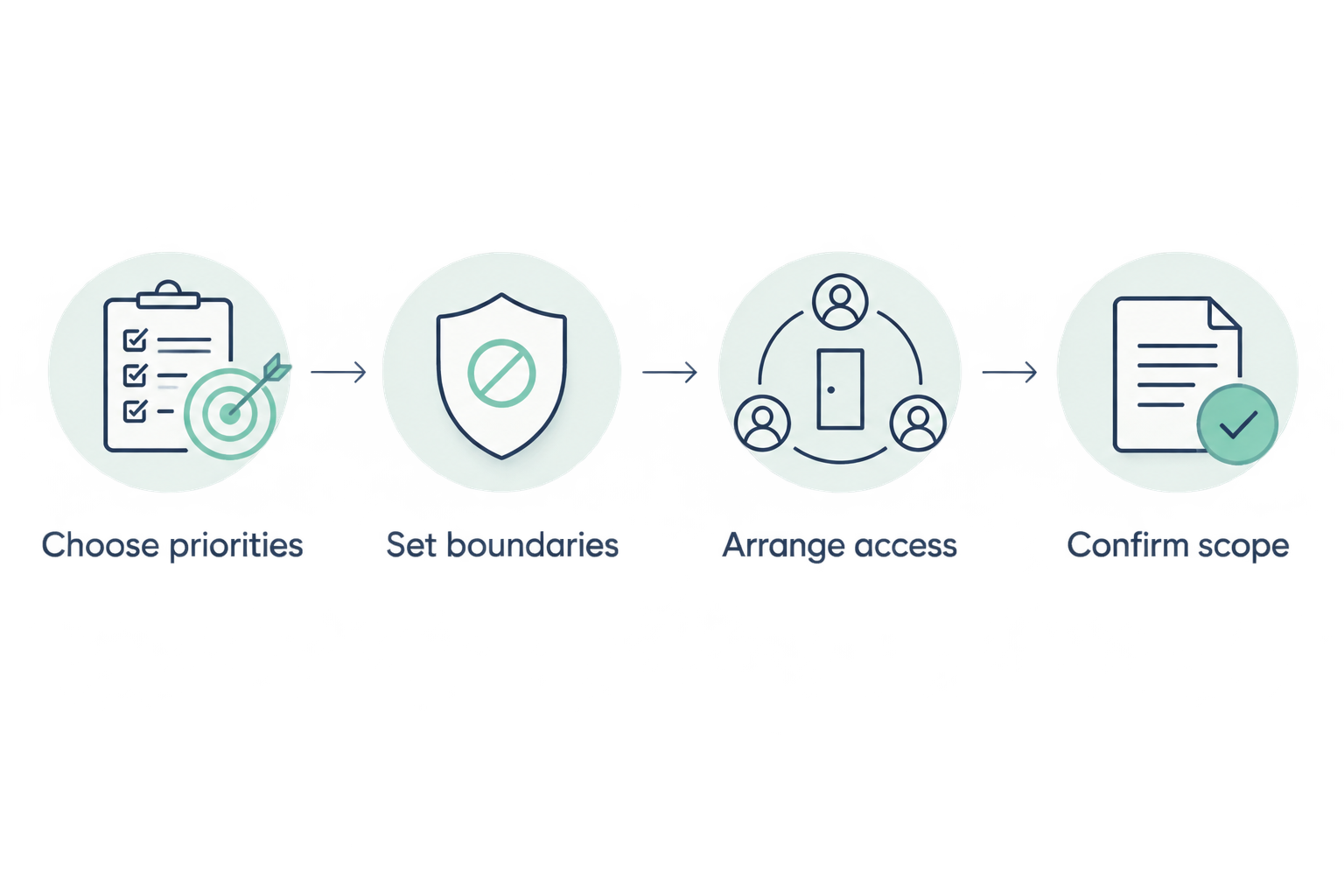
Agree on priorities, boundaries, access, and scope before the cleaning visit.
Start with 1 room if your current checklist is unclear. Write its tasks precisely, then apply the same format to other rooms rather than sending a long list of undefined requests.
Request your Tacoma cleaning quote
Describe your home or workplace, pet arrangements, and priority cleaning areas.
How the checklist items were ranked
Loose-hair removal ranks first because it establishes the order before wet cleaning. Entryways, feeding areas, and bedding follow as distinct, identifiable zones; detail cleaning and the access check complete the working plan.
The ranking uses visible buildup, surface compatibility, repeatability, and clarity of responsibility. It does not claim measured cleaning results or certify any product as suitable for every animal.
Which checklist items should you choose?
Start with loose-hair removal, then add the area with the most visible buildup. Choose the entryway for tracked-in dirt, the feeding station for food residue, or washable bedding for textile care.
For professional help, give Pureandcleancleaning your priority areas and request confirmation of the work. A reliable plan starts with agreed tasks, not assumptions about what a residential or commercial visit includes.
FAQ
What's the best first cleaning task in a home with pets?
Remove visible loose hair and debris before wet cleaning. Use a method approved for the floor or fabric, then follow the relevant cleaning instructions.
How often should I clean pet bedding?
Set the routine according to the bedding's condition and care label. Check whether covers, inserts, and other components have different washing or drying instructions.
Does eco-friendly mean a cleaner is suitable around every pet?
No, an eco-friendly claim does not establish suitability for every animal or use. Read the exact product label and consult your veterinarian about animal-specific concerns.
What should I tell a house cleaner about my pets?
Explain where pets will stay, which doors must remain closed, and which areas need attention. Confirm any product restrictions and whether pet-related equipment is excluded.
Can I use this checklist for an office that allows pets?
Yes, use the same surface and access checks with clear workplace responsibilities. Identify approved pet areas, employee-owned belongings, and a contact who can answer questions during cleaning.
Does a cleaning booking include washing bowls or handling litter?
Do not assume bowl washing, litter handling, laundry, or other pet-care tasks are included. Ask the cleaning provider to confirm each requested task before the visit.
How do I request pet-related cleaning from Pureandcleancleaning?
Describe whether you need residential cleaning or commercial janitorial service, then list your priority areas and pet arrangements. Request confirmation of the proposed scope before booking.
One last thing
Write a do-not-do list alongside the cleaning list: do not open this gate, move this furniture, or wash this nonwashable insert. A clear exclusion gives the person cleaning a usable boundary instead of making them guess.