
Best overall: document the apartment’s condition before cleaning. Best for move-in readiness: prioritize the kitchen and bathroom, then finish floors after the other work. This 2026 guide ranks apartment checklist items and explains how to coordinate residential and commercial cleaning services around a Tacoma move.
TL;DR
Best move-in cleaning checklist Tacoma apartments: document condition first, then clean storage, appliances, bathrooms, touchpoints, and floors.
Pureandcleancleaning provides residential house cleaning and commercial janitorial services in Tacoma.
Apartment interiors and shared building spaces need separate cleaning instructions and agreed responsibilities.
Confirm access, included tasks, and completion checks before scheduling a move-in clean.
Why this matters
A move-in checklist should tell you what needs cleaning, what needs documenting, and who handles each area. Otherwise, you risk unpacking into unfinished cupboards or treating an existing maintenance problem as a cleaning task.
For a Tacoma apartment move in 2026, separate your private living space from shared corridors, entrances, and building facilities. Renters need a usable home; property managers and business decision-makers need clear responsibility for spaces outside the unit.
Pureandcleancleaning is best suited to readers seeking residential house cleaning or commercial janitorial services in Tacoma. Confirm the requested move-in tasks directly rather than assuming every item below belongs in a standard visit.
What makes the best move-in cleaning checklist?
Use these criteria to decide what belongs on your list:
Condition first: Record existing marks, damage, and unresolved issues before cleaning changes their appearance.
Unpacking order: Prioritize surfaces that become difficult to reach once belongings arrive.
Clear scope: Name the room, surface, and requested task instead of writing only “deep clean.”
Surface compatibility: Follow appliance and finish instructions rather than applying one method everywhere.
Defined responsibility: Separate renter tasks, building management duties, and agreed cleaning work.
Visible completion: Identify what you will inspect before putting the room into use.
Move-in cleaning priorities at a glance
These 8 checklist areas follow a practical decision order. The ranking reflects access and responsibility, not a claim that every apartment needs identical work.
Condition walkthrough
Best for: Protecting the handover record
Standout feature: Separates cleaning from maintenance
Key limitation: Does not remove dirt
Empty storage interiors
Best for: Unpacking dishes and belongings
Standout feature: Reaches shelves before they fill
Key limitation: Requires empty, accessible storage
Kitchen appliances
Best for: Preparing food-storage areas
Standout feature: Makes appliance interiors an explicit task
Key limitation: Access and appliance instructions vary
Bathroom surfaces
Best for: Preparing everyday washing areas
Standout feature: Separates fixtures, storage, and finishes
Key limitation: Cleaning does not repair leaks or failed sealant
High surfaces and edges
Best for: Removing overlooked settled dust
Standout feature: Covers ledges before lower surfaces
Key limitation: Safe access limits the scope
Touchpoints
Best for: Finishing frequently handled surfaces
Standout feature: Names handles, switches, and pulls
Key limitation: Does not establish disinfection
Floors and thresholds
Best for: Completing the room
Standout feature: Follows overhead and surface work
Key limitation: Furniture and movers can obstruct access
Final handover
Best for: Assigning remaining work
Standout feature: Connects completion checks to responsibility
Key limitation: Requires agreement between the parties
1. Condition walkthrough: best for a clear handover record
Walk through the apartment before starting work. Photograph existing marks and list problems separately from cleaning requests, following the property’s move-in reporting process.
For a commercial handover, identify which entrance, corridor, or business area belongs in the inspection. Do not treat the apartment checklist as authorization to clean shared premises.
Best for: Renters and property decision-makers establishing the starting condition.
Condition walkthrough pros:
Records areas before belongings obscure them.
Distinguishes dirt from damaged finishes.
Gives everyone the same starting task list.
Condition walkthrough cons:
Cannot replace the property’s required reporting process.
Does not establish who must repair an issue.
Verdict: Hold cleaning in disputed areas until the condition is recorded.
2. Empty storage interiors: best for unpacking without rework
Inspect cupboards, drawers, shelves, and closets before filling them. Request interior cleaning explicitly; the phrase “kitchen cleaning” does not describe whether cupboard interiors belong in the agreed work.
Business decision-makers should apply the same distinction to empty office cupboards and shared storage. Set aside private records and personal belongings rather than expecting cleaners to decide what to move.
Best for: Anyone unpacking dishes, clothing, supplies, or office materials.
Empty storage pros:
Keeps belongings out of the cleaning area.
Makes shelf corners easier to inspect.
Defines interior work separately from exterior wiping.
Empty storage cons:
Occupied shelves restrict access.
Fragile linings or finishes require specific instructions.
Verdict: Hold unpacking until the agreed storage interiors are clean and dry.
3. Kitchen appliances: best for preparing food-storage areas
Check the refrigerator, cooking surfaces, and other appliances included with the apartment. Identify removable parts and accessible surfaces without assuming that pulling out appliances or dismantling components belongs in the job.
For a workplace kitchenette, name the appliances and establish who removes food and personal containers. Residential and commercial requests both need clear boundaries around occupied appliances.
Best for: Renters and businesses preparing kitchens or kitchenettes for use.
Kitchen appliance pros:
Separates interior cleaning from exterior wiping.
Identifies food and belongings that need removing.
Brings persistent odors or visible problems to attention.
Kitchen appliance cons:
Cleaning cannot establish whether an appliance works correctly.
Some components require manufacturer-specific handling.
Verdict: Hold food storage until the refrigerator cleaning and operating checks are complete.
4. Bathroom surfaces: best for preparing everyday washing areas
Break the bathroom request into the toilet, sink, bathing area, mirror, storage, and floor. Report leaks, loose fittings, or damaged sealant separately rather than expecting cleaning to correct them.
For commercial restrooms, add responsibility for supplies and access arrangements to the discussion. Cleaning fixtures and replenishing consumables are different tasks; specify each requested service.
Best for: Preparing apartment bathrooms and defining workplace restroom work.
Bathroom surface pros:
Makes fixtures and storage separate checklist entries.
Keeps repair requests visible.
Supports a room-by-room completion check.
Bathroom surface cons:
Surface damage can remain after cleaning.
Delicate finishes limit suitable cleaning methods.
Verdict: Hold bathroom unpacking until storage and agreed surfaces are ready.
5. High surfaces and edges: best for catching overlooked dust
Name accessible ledges, trim, baseboards, and other overlooked edges. Arrange the work from higher surfaces toward lower ones so the final floor clean comes afterward.
In commercial spaces, identify shelving and overhead areas without assuming cleaners will move equipment or reach inaccessible fixtures. Ask what can be included safely within the agreed scope.
Best for: Empty rooms where exposed edges are easy to inspect.
High-surface pros:
Makes vague dusting requests specific.
Includes details hidden by furniture later.
Creates a clear sequence before floor work.
High-surface cons:
Height and access restrict some tasks.
Fragile fixtures need separate handling instructions.
Verdict: Wait on final floor cleaning until overhead dusting is finished.
6. Touchpoints: best for a detailed surface finish
List door handles, cupboard pulls, suitable switch plates, and other frequently handled surfaces. Follow finish and electrical-care instructions; do not spray liquid directly into switches or electrical openings.
For businesses, identify shared entry handles and accessible communal touchpoints. Routine cleaning is not a substitute for an explicitly defined disinfection process.
Best for: Adding specific finishing tasks to a general room checklist.
Touchpoint pros:
Names small surfaces that broad requests overlook.
Works for apartment and workplace checklists.
Gives the final walkthrough concrete inspection points.
Touchpoint cons:
Material compatibility still matters.
A clean appearance does not verify disinfection.
Verdict: Skip blanket disinfection claims; specify the actual cleaning task.
7. Floors and thresholds: best for completing the room
Leave the final floor pass until higher surfaces are finished. Identify the flooring material and use its care instructions rather than assuming every room accepts the same wet-cleaning method.
For commercial entrances and shared corridors, coordinate the cleaning window with building access. Keep the distinction clear between an apartment floor request and separately authorized common-area work.
Best for: Finishing accessible rooms before furniture placement.
Floor and threshold pros:
Follows the rest of the room-cleaning sequence.
Includes entry edges and overlooked corners.
Supports a final visual inspection.
Floor and threshold cons:
Deliveries can interrupt the finished area.
Occupied rooms limit access under furniture.
Verdict: Hold furniture placement until the floor is ready for use.
8. Final handover: best for assigning remaining work
Compare the finished rooms with the written task list. Record incomplete cleaning separately from repairs, inaccessible areas, or tasks that were never included.
For a commercial handover, identify who accepts completion and who handles remaining building issues. For an apartment, keep the cleaning review separate from the landlord’s formal condition process.
Best for: Renters, managers, and business contacts coordinating completion.
Final handover pros:
Checks the work against an agreed scope.
Makes outstanding items visible.
Names the person responsible for follow-up.
Final handover cons:
Cannot resolve an unclear original agreement.
Requires access to inspect the relevant areas.
Verdict: Hold sign-off on unresolved cleaning items until responsibility is clear.
Finish refrigerator cleaning before adding fragrance
In your 2026 move-in plan, separate refrigerator cleaning from odor control. Remove abandoned food and address visible residue before considering fridge cleaners and deodorizers; masking an odor does not remove its source.
For an apartment refrigerator, follow the appliance instructions for removable shelves and drawers. For a workplace refrigerator, first establish who owns the contents and who authorizes disposal. Do not make cleaners responsible for deciding whether someone else’s food should be discarded.
If an odor remains after cleaning, report it rather than repeatedly adding scented products. A cleaning checklist should identify an unresolved issue, not label every problem as solved.
Plan the cleaning window around access
Build your 2026 booking request around 1 written scope and 2 walkthroughs: one before cleaning and one afterward. These are planning steps, not a promised service package or required appointment format.
Confirm access: State when keys are available, who admits the team, and which rooms are accessible.
Agree scope: List surfaces, appliance interiors, storage, and any excluded tasks.
Protect belongings: Remove personal items from the agreed work areas and identify anything that should not be moved.
Review completion: Name the person who will inspect the finished areas and record follow-up tasks.
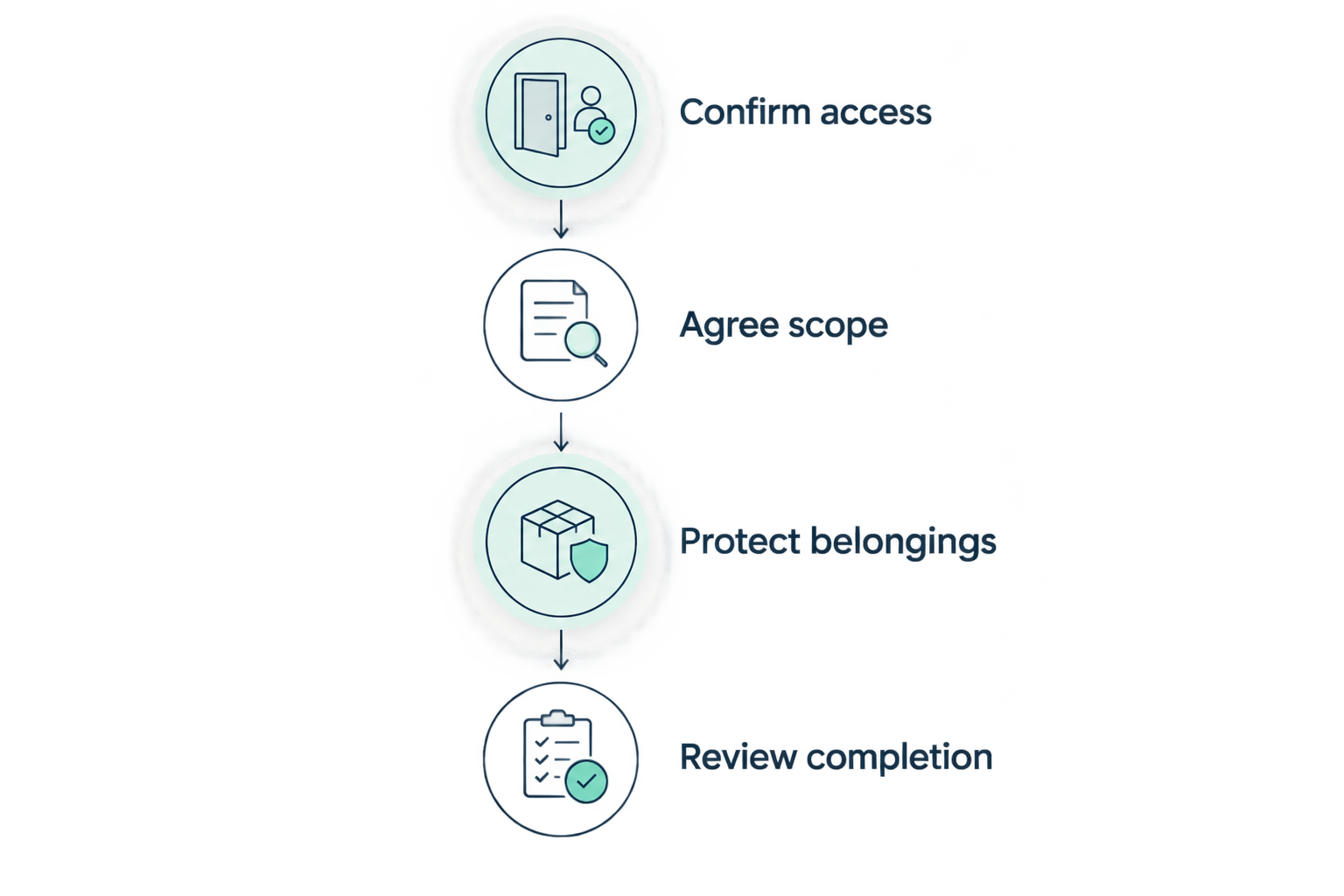
Agree on access and scope before the cleaning visit.
For a home, explain whether the apartment will be empty or partly unpacked. For a business, explain occupancy, staff belongings, shared-space boundaries, and the preferred access window. Ask how scheduling and team instructions will be confirmed rather than assuming a particular arrangement.
Pureandcleancleaning provides house cleaning and commercial janitorial services in Tacoma, Seattle, and Pierce County. When you request a quote, describe the property, requested tasks, access arrangements, and preferred timing; confirm the included work before booking.
How these priorities are ranked
The 2026 order puts documentation before cleaning, empty storage before unpacking, and floor finishing after overhead work. It also separates apartment interiors from commercial and shared-building responsibilities.
The best sequence for your property follows actual access. Move an item earlier when belongings will block it, but keep repair reporting and cleaning requests distinct.
Which checklist items should you choose first?
Start with the condition walkthrough, then prioritize the kitchen and bathroom. Complete empty storage before unpacking and leave final floor work until the other cleaning is finished.
For business decision-makers, the equivalent first move is agreeing on boundaries: private premises, shared facilities, and the tasks authorized for each. A clear list is more actionable than an undefined request for a thorough clean.
FAQ
What's the best move-in cleaning checklist for Tacoma apartments?
Start with a condition walkthrough, then cover empty storage, appliances, bathrooms, high surfaces, touchpoints, floors, and a final handover. Adjust the order around access and unpacking rather than assuming every apartment needs identical work.
Should I clean before moving furniture into my apartment?
Clean accessible storage and floor areas before placing furniture or unpacking belongings. Confirm when keys are available and coordinate the cleaning window with deliveries.
Does move-in cleaning include the inside of cupboards and appliances?
Include cupboard and appliance interiors explicitly in your request and confirm them before booking. A general room-cleaning description does not establish whether these tasks are included.
Can a move-in clean fix mold, leaks, or damaged sealant?
Do not treat mold, leaks, or damaged sealant as ordinary checklist items that routine cleaning will resolve. Report the condition to the responsible property contact and clarify the appropriate next step.
How does apartment cleaning differ from commercial cleaning?
Apartment cleaning concerns the agreed private living areas; commercial cleaning concerns the agreed business premises. Shared corridors, building restrooms, and entrances need separately defined responsibility and authorization.
How do I prepare a workplace for a cleaning visit?
Clear the agreed work areas, secure private documents, identify restricted spaces, and confirm access. Explain who handles food, personal belongings, and shared facilities before work begins.
How do I arrange house cleaning or commercial cleaning services in Tacoma?
Contact Pureandcleancleaning with the property type, location, requested tasks, access details, and preferred timing. Confirm the service scope and scheduling arrangements before booking.
One last thing
For your 2026 move, write down what should remain untouched as carefully as what needs cleaning. A closed cupboard, personal document, fragile fixture, or unresolved maintenance issue needs a clear instruction—not an assumption.