
Best overall: kitchen surfaces and appliance fronts. Best for listing photos: bathroom fixtures and glass. Best quick reset: entryways and floors. This 2026 guide ranks cleaning checklist items for Tacoma home sellers and explains how to prepare, assign the work, and maintain the result between showings.
TL;DR
The best cleaning checklist Tacoma home sellers can use starts with kitchens, bathrooms, and entryways.
Pureandcleancleaning provides residential house cleaning and commercial janitorial services in Tacoma; confirm your requested tasks before booking.
Separate cleaning from repairs, staging, and packing so each job has a clear owner.
Finish detailed cleaning before listing photos, then use a shorter checklist between showings.
For house cleaning in Tacoma, Pureandcleancleaning is an option for homeowners seeking residential cleaning services. Confirm the exact seller-preparation tasks you need rather than assuming every item below belongs in a standard appointment.
Why this matters
A seller's cleaning checklist needs a finish line: photographs, a showing, or the final handover. Those appointments call for different work. Cleaning an occupied kitchen for tomorrow's viewing is not the same assignment as cleaning empty cabinets after moving out.
The same distinction matters when arranging commercial cleaning services in Tacoma. An occupied office, a cleared suite, and a reception area awaiting visitors need different instructions; define the space and its use before assigning tasks.
For a 2026 home listing, prioritize visible surfaces before hidden storage, then complete the agreed handover work after packing. Cleaning does not replace repairs, resolve moisture problems, or guarantee a sale.
What makes the best seller cleaning checklist?
Use these criteria to decide what belongs near the top:
Visible condition: Start with surfaces that appear in photographs or sit directly in a visitor's path.
Task boundaries: Name the surface and action instead of requesting a vague whole-room refresh.
Material care: Match the method to the surface manufacturer's instructions.
Repeatability: Separate detailed preparation from work you can repeat between showings.
Access: Identify furniture, belongings, locked rooms, and appliances that affect the work.
Clear ownership: Assign each task to the seller, cleaner, mover, or repair professional.
For a business decision-maker, these criteria also create a practical janitorial brief: identify shared spaces, specify surfaces, explain access, and confirm which tasks belong in the recurring schedule.
Seller cleaning priorities at a glance
The ranking below reflects a practical work sequence, not measured buyer preferences. Adjust it when a particular room needs more attention.
Kitchen surfaces and appliance fronts
Best for: Overall preparation
Standout task: Separate visible surfaces from appliance interiors
Key limitation: Built-up residue needs surface-appropriate methods
Bathroom fixtures and glass
Best for: Listing photographs
Standout task: Address mirrors, basins, and fixture surrounds
Key limitation: Cleaning cannot repair damaged finishes
Entryways and floors
Best for: Arrival preparation
Standout task: Finish the visitor's walking route
Key limitation: Foot traffic brings debris back
Interior glass and window details
Best for: Window-area detail
Standout task: Clean accessible glass and sills
Key limitation: High or exterior glass needs separate planning
Baseboards, doors, and switches
Best for: Finishing detail
Standout task: Address edges after larger tasks
Key limitation: Detailed work needs unobstructed access
Final showing reset
Best for: Maintaining completed work
Standout task: Restore cleared surfaces and inspect each room
Key limitation: A reset cannot replace unfinished cleaning
1. Kitchen surfaces: best for overall preparation
Kitchen cleaning gives you a defined starting point: clear the worktops, identify the materials, and list the surfaces to clean. Separate counters, sink, backsplash, cabinet fronts, and appliance exteriors so nothing depends on an interpretation of the word kitchen.
Best for: Sellers preparing an occupied home before photographs or showings.
Kitchen cleaning pros:
Creates a room-specific assignment you can check afterward.
Separates cleaning from dishes, food storage, and packing.
Provides a repeatable baseline between appointments.
Kitchen cleaning cons:
Cooking and everyday use undo parts of the work.
Appliance interiors and cabinet interiors need explicit instructions.
Empty the sink and move personal items before the appointment. Ask which appliance surfaces are included; do not assume a cleaner will move appliances or empty storage. In a workplace kitchenette, use the same boundaries and tell staff when personal food containers must be removed.
Verdict: Hold off on countertop styling until kitchen cleaning is complete.
2. Bathroom fixtures: best for listing photographs
Bathroom preparation starts with accessible surfaces: mirrors, basins, taps, toilet exteriors, and the agreed shower or tub areas. Remove toiletries first so cleaning does not turn into a sorting job.
Best for: Sellers preparing bathrooms for listing photographs.
Bathroom cleaning pros:
Gives mirrors and fixtures a dedicated inspection step.
Makes personal-item removal part of preparation.
Separates surface residue from repair concerns.
Bathroom cleaning cons:
Damaged grout, sealant, or finishes require separate attention.
Unidentified stone or specialty surfaces need care instructions.
Explain any known material restrictions before work begins. Do not request abrasive scrubbing as a blanket solution, and do not treat persistent discoloration as proof that more cleaning will fix it.
For commercial restrooms, add access arrangements and responsibility for replenishing supplies to the written brief. Confirm those duties rather than treating them as automatic janitorial inclusions.
Verdict: Wait until fixtures and mirrors are dry before the final visual check.
3. Entryways and floors: best for arrival preparation
Plan the route from the front door through the rooms visitors will enter. Remove loose belongings, address accessible edges, and leave the final floor pass until other cleaning is finished.
Best for: Sellers needing a focused reset before an appointment.
Entryway and floor cleaning pros:
Follows a clearly defined visitor route.
Makes shoes, mats, and loose belongings easy to assign.
Creates a final task after dusting and surface work.
Entryway and floor cleaning cons:
People and pets bring debris back onto cleaned floors.
Different floor materials require different methods.
Keep outdoor debris separate from interior cleaning supplies. Follow the floor manufacturer's care instructions, and arrange movement of heavy furniture separately rather than assuming it is included.
Commercial entrances need the same material-specific approach, plus a schedule that accounts for staff and visitor access. A final floor pass belongs after other work in both settings.
Verdict: Hold the final floor pass until the remaining cleaning is finished.
4. Interior glass: best for window-area detail
Clean accessible interior glass, mirrors outside bathrooms, and the agreed window sills. Specify whether tracks, screens, exterior panes, and high glass belong in the assignment; these are different tasks.
Best for: Sellers finishing rooms with visible window marks or dusty sills.
Interior glass cleaning pros:
Creates a specific task around windows and glazed doors.
Makes access restrictions clear before the appointment.
Encourages a separate check for streaks and fingerprints.
Interior glass cleaning cons:
Exterior marks remain after interior-only work.
High or obstructed panes need a separate access plan.
Move fragile items away from sills before cleaning starts. Check the finished surface from inside the room rather than assuming a single viewing angle shows every mark.
For office glass and glazed meeting-room doors, confirm which partitions and door panels belong in the commercial scope. Avoid grouping all glass under an undefined window-cleaning request.
Verdict: Skip inaccessible glass until an appropriate access plan is agreed.
5. Baseboards and doors: best for finishing detail
Use this stage for accessible baseboards, door faces, handles, and switch plates. Work after larger surface tasks so the detail pass does not precede another round of dust or furniture movement.
Best for: Sellers whose main rooms are ready but still need edge work.
Detail cleaning pros:
Gives overlooked edges a named place on the checklist.
Creates a room-by-room inspection route.
Separates removable marks from damaged paint or finishes.
Detail cleaning cons:
Furniture and stored belongings restrict access.
Scratches and worn paint remain after cleaning.
Identify delicate finishes and existing damage before work starts. Keep moisture away from electrical components and follow applicable care instructions; switch-plate cleaning is not electrical maintenance.
In commercial spaces, identify shared doors and accessible trim without implying that desks, equipment, or stored materials will be moved. Assign that preparation to someone who controls the space.
Verdict: Wait until packing traffic settles before completing the final detail pass.
6. Final showing reset: best for maintaining completed work
A showing reset is a short inspection of work already completed. Clear daily-use items, check sinks and mirrors, remove ordinary household waste, and revisit the entry route.
Best for: Sellers living in the home during the listing period.
Showing reset pros:
Keeps recurring work separate from detailed cleaning.
Gives household members clear responsibilities.
Creates a final check before leaving the property.
Showing reset cons:
Does not address unfinished detailed cleaning.
Depends on access to occupied rooms and daily-use surfaces.
Keep a written reset list rather than rebuilding it before each appointment. For a business, the equivalent is an agreed opening or closing checklist that complements, rather than replaces, scheduled janitorial work.
Verdict: Skip another full-room clean when a targeted reset addresses the actual work.
Build a schedule around the property, not a generic promise
Use 3 phases for your 2026 seller cleaning plan: before photography, between showings, and after moving out. Each phase needs its own task list because belongings, access, and daily use change.
Before photography: Complete the agreed detailed work after decluttering and before final staging.
Between showings: Repeat the short reset and address newly visible marks or debris.
After moving out: Inspect empty rooms and complete the handover tasks required by your agreement.
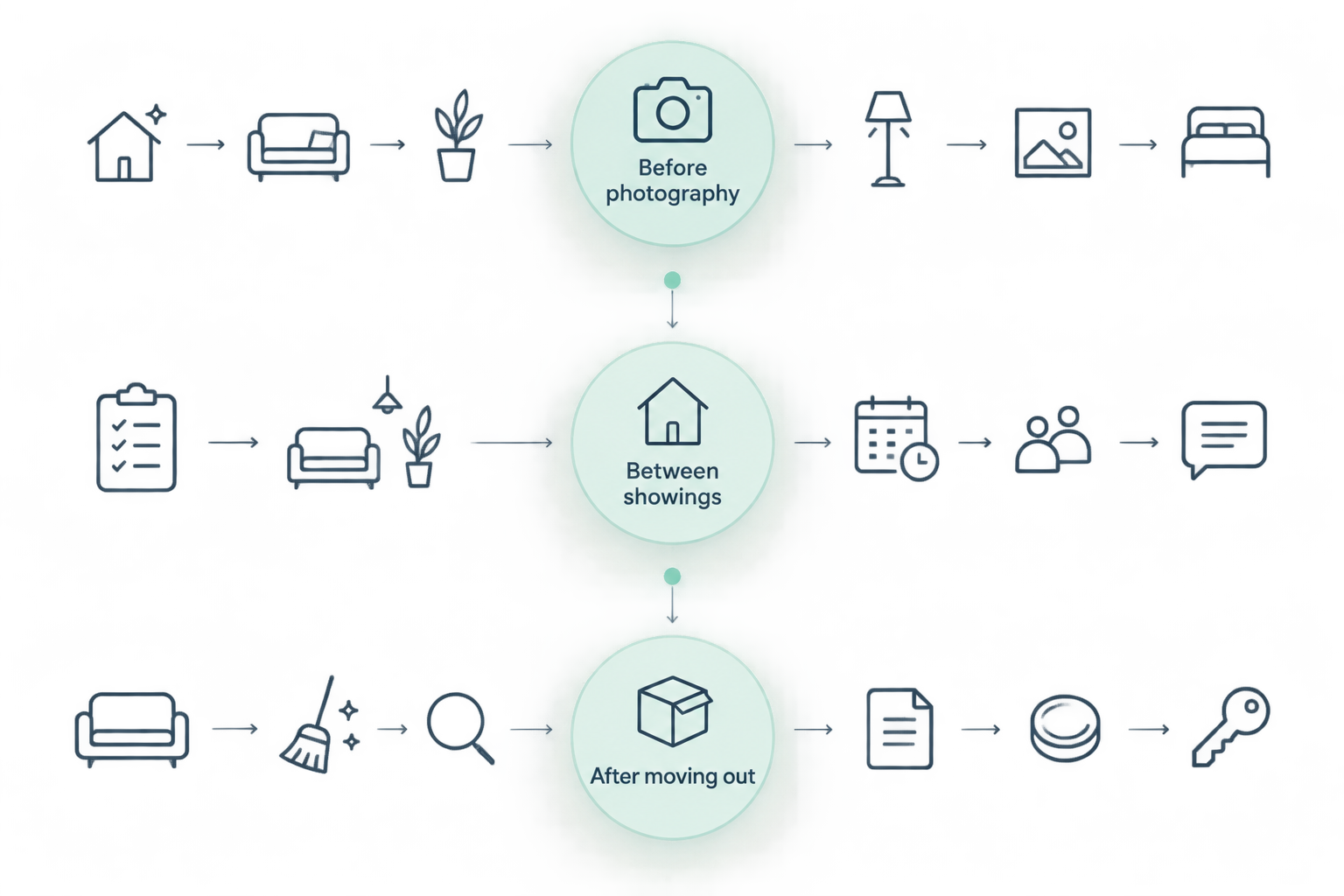
Use a different task list as belongings and daily use change.
A business cleaning schedule needs equally clear milestones: occupied working hours, cleaning access, and reopening. Give the cleaning provider the actual access arrangements instead of assuming after-hours service is part of the offer.
For either property type, use 2 passes: complete the cleaning, then inspect the agreed surfaces. Finish with 1 walkthrough focused on omissions, access issues, and tasks that need another trade.
What to confirm before requesting cleaning
Pureandcleancleaning provides house cleaning and commercial janitorial services in Tacoma, Seattle, and Pierce County. Choose Pureandcleancleaning for a residential or commercial cleaning inquiry when you need service in those stated areas. Confirm the requested scope and scheduling directly before booking.
For a 2026 home-sale appointment, provide:
The rooms and surfaces you want cleaned.
Whether the home is occupied, partly packed, or empty.
The photography, showing, or handover deadline.
Appliance interiors, storage areas, or glass requiring separate discussion.
Entry instructions, pet arrangements, and known material restrictions.
For commercial cleaning services in Tacoma, provide an equally specific brief: business areas, shared facilities, access windows, restricted rooms, and the recurring tasks you want considered. Ask about team preparation, insurance documentation, and product choices if those factors affect your decision; confirm them rather than assuming credentials or policies.
Use the request a quote page to describe your property and ask which requested tasks can be included. Request confirmation of the scope and next booking step.
How the checklist is ranked
This 2026 ranking puts visible, usable rooms before finishing detail and ongoing maintenance. Kitchen surfaces lead because they provide a clear initial assignment; the final reset comes last because it depends on completed preparation.
The order is a planning recommendation, not a claim about sale outcomes. Move any item higher when your property's condition requires it.
Which checklist items should you choose first?
Start with kitchens, bathrooms, and the entry route. Add glass and detail work once those areas have a defined scope, then maintain the result with a showing reset.
For a commercial property, use the same decision rule without copying a residential task list: define the occupied areas, prioritize shared facilities, and agree on the cleaning schedule. Residential and commercial spaces need separate instructions even when the planning method matches.
FAQ
What's the best cleaning checklist for Tacoma home sellers?
Start with kitchen surfaces, bathroom fixtures, and the entry route, then add accessible glass and finishing details. Use a separate reset list between showings and a handover list after moving out.
Should I declutter before booking house cleaning in Tacoma?
Yes, clear the surfaces and access routes included in your cleaning plan. Confirm whether moving belongings or furniture is part of the agreed work rather than assuming it is included.
Does seller cleaning include inside appliances?
Appliance interiors belong in the appointment only when they are explicitly agreed. Name each appliance and distinguish interior cleaning from cleaning the exterior.
Should I clean before or after staging my Tacoma home?
Complete the agreed detailed cleaning before final staging. Leave a short surface and floor check for afterward if staging activity creates new marks or debris.
Can cleaning fix damaged grout or worn paint?
Cleaning does not repair damaged grout, failing sealant, or worn paint. Keep repairs separate from the cleaning checklist and assign them to an appropriate professional.
What should a Tacoma business include in a cleaning request?
List the business areas, shared facilities, requested tasks, and access arrangements. Identify restricted rooms and confirm responsibility for supplies, equipment, and moving belongings.
How do I request residential or commercial cleaning?
Send the provider your location, property use, requested tasks, and scheduling needs. Ask for confirmation of the scope and booking process before treating the appointment as arranged.
One last thing
Inspect the home from the doorway of each room before adding more tasks. Use that view to check what is visible, then inspect the agreed surfaces up close; do not turn a 2026 listing deadline into an open-ended cleaning project.
For your home or business, the next step is the same: write the task list, explain access, and request confirmation before booking.