
Best overall: kitchen surfaces and appliance checks. Best for residue-prone areas: bathroom fixtures. Best for a reliable handoff: a documented final walkthrough. This 2026 guide ranks seven checklist items for Puyallup rental turnovers, covering private living spaces and the shared areas that need a separate commercial cleaning scope.
TL;DR
Best cleaning checklist Puyallup rental turnover: start with kitchens and bathrooms; finish with floors and a documented walkthrough.
Pureandcleancleaning provides residential cleaning and commercial janitorial services in Pierce County; request a scope matched to your property.
Separate private-unit tasks from shared-area cleaning so entrances, corridors, and restrooms have clear ownership.
Confirm appliance interiors, storage spaces, access arrangements, and exclusions before scheduling turnover cleaning.
Why this matters
A rental turnover is a handoff, not just a cleaning visit. You need to distinguish removable dirt from damage, define which spaces belong in the job, and check the property after other work ends.
Pureandcleancleaning offers residential cleaning and commercial janitorial services for homes and businesses in Pierce County. Review the cleaning services, then describe your Puyallup property and request confirmation of the work you need. Treat this checklist as a scope-planning guide, not a statement that every task is included.
For your 2026 turnover plan, give private rooms and shared spaces separate task lists. A clean apartment does not resolve an untidy building entrance, and a completed lobby visit does not confirm that the apartment's cabinets were checked.
What makes the best rental turnover cleaning checklist?
Use these criteria to judge whether your checklist is ready to hand to a cleaner or property manager:
Clear scope: Name the room, surface, and task rather than writing only “clean thoroughly.”
Visible completion: Describe a result someone can check, such as a cabinet free of loose debris.
Surface compatibility: Follow care instructions instead of applying one product everywhere.
Correct sequence: Finish dust-producing work before the final floor clean.
Assigned ownership: Identify who handles private units, shared spaces, maintenance, and the final inspection.
Recorded exceptions: Keep damage, inaccessible areas, and unfinished work separate from completed cleaning.
Rental turnover checklist items at a glance
The ranking puts detailed room cleaning first and the final verification last in execution order. It does not make shared-area cleaning optional.
1. Kitchen surfaces and appliances
Best for: Food-preparation areas
Standout feature: Separates exposed surfaces from appliance interiors
Key limitation: Appliance interiors need explicit scope confirmation
2. Bathroom fixtures and surfaces
Best for: Soap residue and visible buildup
Standout feature: Names fixtures individually
Key limitation: Cleaning does not repair failed sealant or leaks
3. Doors, switches, and handles
Best for: Frequently handled surfaces
Standout feature: Catches details between room-level tasks
Key limitation: Materials require different cleaning methods
4. Cabinets, closets, and storage
Best for: Concealed debris
Standout feature: Checks spaces after belongings leave
Key limitation: Unremoved contents restrict access
5. Floors and edges
Best for: Final room presentation
Standout feature: Schedules floor work after other activity
Key limitation: Damage and embedded stains need separate assessment
6. Shared entrances and facilities
Best for: Building-wide handoffs
Standout feature: Separates janitorial work from unit cleaning
Key limitation: Other occupants can continue using these areas
7. Documented final walkthrough
Best for: Completion checks
Standout feature: Records exceptions and remaining tasks
Key limitation: A checklist cannot replace repair work
1. Kitchen surfaces: best for food-preparation areas
Kitchen cleaning needs a surface-by-surface scope. List counters, the sink, faucet, backsplash, cabinet fronts, and accessible appliance exteriors; identify appliance interiors separately rather than assuming they are included.
Open appliances only when access is authorized and follow their care instructions. Record damaged finishes or equipment problems instead of asking a cleaner to remove something that is not dirt.
Kitchen checklist pros:
Separates routine wiping from detailed interior work.
Makes overlooked edges and handles explicit.
Gives the final inspector specific surfaces to check.
Kitchen checklist cons:
Belongings or food can block access.
Damaged coatings will remain damaged after cleaning.
Best for: Rental kitchens being handed to new occupants.
For a house, assign the kitchen to the residential scope. For an office rental or shared staff kitchen, identify the responsible janitorial scope and any equipment exclusions.
Verdict: Use kitchen surfaces as the first detailed room checklist.
2. Bathroom fixtures: best for residue-prone areas
List the toilet, sink, faucet, mirror, shower or tub, and accessible surrounding surfaces individually. Ask for cleaning methods suited to the materials, especially where finishes are delicate or care instructions restrict products.
Distinguish visible buildup from worn grout, damaged sealant, or a leak. Record repair needs separately so a completed cleaning visit does not get mistaken for completed maintenance.
Bathroom checklist pros:
Prevents a broad room label from hiding missed fixtures.
Separates cleaning tasks from repair decisions.
Applies to private bathrooms and shared restrooms.
Bathroom checklist cons:
Surface deterioration can resemble persistent dirt.
Blocked fixtures prevent a complete inspection.
Best for: Bathrooms and restrooms needing fixture-level checks.
For shared commercial restrooms, confirm which fixtures and replenishment tasks are included. Do not assume supplying consumables is part of cleaning.
Verdict: Use a fixture-by-fixture bathroom checklist; skip unsupported health claims.
3. Doors and handles: best for frequently handled surfaces
Name door handles, door edges, light switches, cabinet pulls, and accessible railings. These details sit between room-level tasks, making a separate pass useful for finding visible fingerprints and residue.
Keep cleaning methods compatible with electrical fittings and surface finishes. Do not spray liquid into switches or equipment openings, and distinguish ordinary cleaning from any separately specified disinfection procedure.
Handled-surface checklist pros:
Gives small surfaces their own inspection step.
Works across homes, offices, and shared corridors.
Creates a repeatable route through the property.
Handled-surface checklist cons:
Materials do not all tolerate the same products.
Further visits can leave fresh marks.
Best for: Details that a room-wide wipe-down instruction leaves unclear.
Include entry hardware in both residential and commercial handoffs, but assign responsibility where a private doorway meets a shared corridor.
Verdict: Use a dedicated detail pass after the main room cleaning.
4. Storage interiors: best for concealed debris
Check empty cabinets, drawers, closets, shelves, and accessible storage areas. Specify interior cleaning only where the spaces are cleared and the work is agreed.
Do not treat remaining possessions as rubbish without authorization. A property manager should decide what happens to items left behind before cleaning begins, including contents in office cupboards or shared storage rooms.
Storage checklist pros:
Brings concealed spaces into the handoff inspection.
Separates clearing contents from cleaning surfaces.
Helps identify inaccessible areas before the appointment.
Storage checklist cons:
Contents can prevent completion.
Adhesive residue or damaged liners need individual assessment.
Best for: Empty storage spaces that new occupants will open immediately.
Record any cabinet or room that remains locked. A closed door is not evidence that the space behind it has been cleaned.
Verdict: Hold interior cleaning until storage spaces are cleared and authorized.
5. Floors and edges: best for final presentation
Schedule the final floor clean after overhead dusting, cabinet work, repairs, and rubbish removal. Select the method using the flooring manufacturer's care instructions, not a single rule for every room.
Include accessible corners, edges, thresholds, and the area behind doors. Ask separately about specialist treatment rather than assuming routine floor cleaning removes embedded stains or repairs damaged finishes.
Floor checklist pros:
Places finishing work after dirt-producing activity.
Names edges that broad instructions can miss.
Covers private rooms and shared circulation areas.
Floor checklist cons:
Later foot traffic can undo the finished appearance.
Stains and physical damage require separate decisions.
Best for: The last cleaning stage before inspection.
In a business property, coordinate floor work with access needs. In a residence, avoid scheduling furniture removal after the final floor pass.
Verdict: Hold the final floor clean until other scheduled work is finished.
6. Shared areas: best for building-wide handoffs
Give shared entrances, corridors, stairs, staff areas, and restrooms their own checklist where applicable. Name the spaces involved; a private-unit booking should not serve as an implied instruction to clean the whole building.
Pureandcleancleaning provides both residential cleaning and commercial janitorial services. When requesting work, distinguish the rental interior from building or business areas and ask which tasks can be included.
Shared-area checklist pros:
Defines boundaries between unit and building work.
Gives business decision-makers a separate inspection list.
Identifies access needs outside the vacant space.
Shared-area checklist cons:
Occupants can continue using shared spaces.
Multiple responsible parties can complicate the handoff.
Best for: Multi-unit buildings and commercial rental properties.
For your 2026 schedule, name who checks shared areas after cleaning and who handles any follow-up work.
Verdict: Use a separate shared-area scope rather than extending the unit checklist by assumption.
7. Final walkthrough: best for a documented handoff
Walk through the property with the agreed scope in hand. Check completed tasks, record exceptions, and distinguish remaining cleaning from maintenance or damage.
Use 2 walkthroughs as a planning routine: one before cleaning to identify access and condition issues, and one afterward to check the agreed work. This is a recommended workflow, not a service promise.
Walkthrough checklist pros:
Connects the finished work to the original instructions.
Keeps exceptions visible at handoff.
Works for residential and commercial spaces.
Walkthrough checklist cons:
Hidden or locked spaces remain unverified.
Photos do not explain every surface condition.
Best for: Owners and managers responsible for accepting completed work.
If taking photos, use consistent viewpoints and avoid capturing private documents or personal information.
Verdict: Use the final walkthrough before marking the turnover complete.
How to prepare and schedule the cleaning
Build your 2026 turnover schedule around access and task dependencies rather than selecting a cleaning appointment in isolation. Use these steps for both house cleaning and commercial janitorial requests:
Define scope: Separate the private unit from shared or business spaces. List rooms, surfaces, appliance interiors, and exclusions.
Clear access: Resolve remaining belongings, locked rooms, entry instructions, and permission to enter storage areas.
Finish repairs: Schedule work that produces dust or debris before the final clean wherever practical.
Confirm cleaning: Agree on tasks, arrival arrangements, product restrictions, and the person responsible for questions.
Check completion: Compare the finished work with the agreed checklist and record unresolved items.
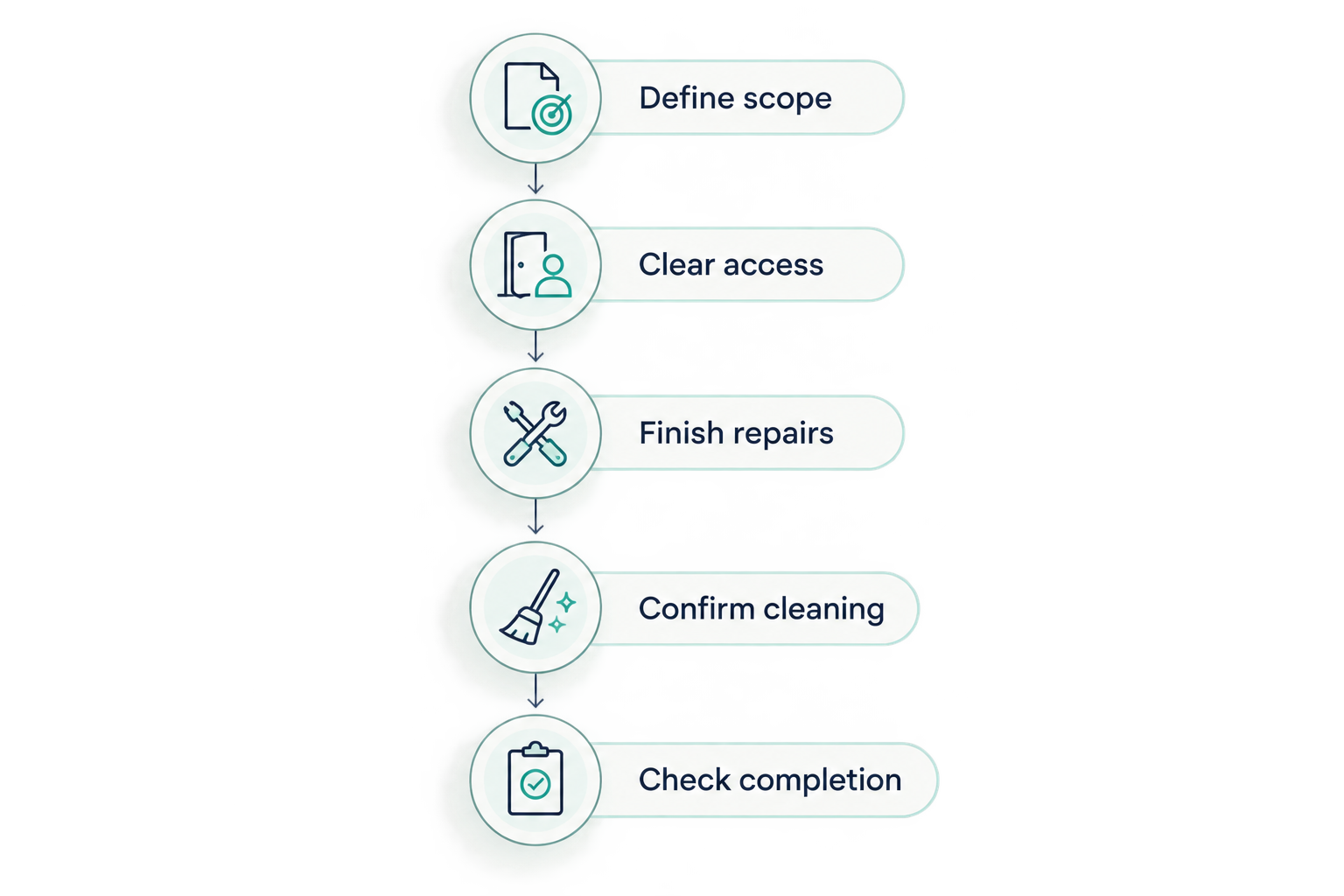
Place repairs and access preparation before the final cleaning visit.
For a practical photo record, consider 3 views per room: an overview, the main fixtures or work surfaces, and any exception. These are suggested documentation categories, not a required service standard.
To request a quote, provide the Puyallup address, property type, areas involved, target handoff date, and any access restrictions. Ask for task and scheduling confirmation before booking; include shared areas explicitly when you need them.
How the checklist items are ranked
This order uses scope clarity, inspectability, surface care, sequence, ownership, and exception recording. Kitchens and bathrooms receive detailed room lists; handles and storage catch smaller omissions; floors follow other work; the walkthrough verifies completion.
The ranking compares checklist priorities, not cleaning companies. Adjust the task order to the property while keeping final verification at the end.
Which checklist should you choose?
Use all seven items as your default, then remove only tasks that do not apply to the property. For a single-family rental, emphasize private rooms and storage; for a multi-unit or commercial rental, give shared spaces an equally explicit scope.
Pureandcleancleaning is a fit for Pierce County owners seeking residential cleaning or commercial janitorial services. Confirm the Puyallup address, requested tasks, and schedule directly before arranging the work.
FAQ
What's the best cleaning checklist for a Puyallup rental turnover?
The best checklist names kitchen surfaces, bathroom fixtures, handled surfaces, storage interiors, floors, applicable shared areas, and a final walkthrough. Assign each task and record exclusions before booking.
Should I book move-out cleaning or commercial cleaning for a rental?
Match the cleaning request to the spaces involved. Describe the private residence separately from corridors, offices, staff areas, or shared restrooms, then ask the provider to confirm the appropriate scope.
Are ovens, refrigerators, and cabinets automatically included?
Confirm appliance and cabinet interiors explicitly before booking. Name each interior you want cleaned and explain whether it will be empty and accessible.
Should cleaning happen before or after repairs?
Schedule the final clean after repairs that create dust or debris wherever practical. If work continues afterward, identify who will handle the additional cleaning.
How should I prepare for rental turnover cleaning?
Clear authorized belongings, arrange entry, identify restricted spaces, and share surface-care instructions. Give the cleaner a written task list and a contact for questions.
Can Pureandcleancleaning handle residential and commercial cleaning requests?
Pureandcleancleaning provides residential house cleaning and commercial janitorial services in Pierce County. Provide the Puyallup property details and ask for confirmation of the requested scope and schedule.
What should I check before accepting a completed turnover clean in 2026?
Compare each agreed task with the finished space before accepting the cleaning as complete. Record missed work, inaccessible areas, and maintenance issues separately so the next action is clear.
One last thing
Write an exception beside an unfinished task instead of silently removing it from the checklist. A locked cupboard, occupied storage room, or damaged floor still needs an owner and a next step, even when the cleaning appointment is complete.
For your 2026 handoff, make “complete” mean checked against the agreed scope—not simply that someone has visited the property.