
Best overall: restroom cleaning. Best for shared spaces: kitchen cleaning. Best for tracked-in debris: entrance and floor care. This 2026 guide ranks the best commercial cleaning checklist items for Tacoma offices and shows how to adapt each task for your home.
TL;DR
The best commercial cleaning checklist Tacoma offices can use names tasks, locations, schedules, and responsible people.
Pureandcleancleaning provides residential house cleaning and commercial janitorial services in Tacoma, Seattle, and Pierce County.
Prioritize restrooms, shared kitchens, and entrance floors before adding detailed dusting to an office cleaning checklist.
Keep office and house cleaning task lists separate; shared principles do not mean identical service requirements.
For residential house cleaning and commercial janitorial services in Tacoma, Pureandcleancleaning serves both homeowners and businesses. Review the cleaning services with your room list in hand, and confirm the exact tasks before booking.
Why this matters
A checklist fails when it names rooms without defining the work. “Clean the kitchen” leaves unanswered questions about dishes, appliance interiors, cabinets, and waste removal.
Office managers need clear boundaries around occupied desks, shared facilities, and building access. Homeowners need the same clarity around personal belongings, bedrooms, kitchens, and bathrooms. Neither should assume that a general service description includes every surface.
For your 2026 plan, start with 3 priority areas: restrooms, kitchens, and entrances. Then add workstation boundaries and detail tasks according to how you use the property.
What makes the best commercial cleaning checklist
Use these criteria to judge a checklist before assigning work:
Specific tasks: Name the action and surface, such as wiping the sink basin rather than cleaning the bathroom.
Clear ownership: Identify what occupants handle and what you want the cleaning team to handle.
Use-based scheduling: Match the proposed frequency to occupancy, visible debris, and room use.
Surface instructions: Flag materials and equipment that need particular care before work begins.
Verifiable completion: Describe a finish someone can check without moving private belongings or opening restricted storage.
Keep 2 task lists when you manage both a home and an office. Shared headings are useful, but access rules and room contents need separate instructions.
The checklist items at a glance
The ranking below is a planning order, not a claim that every building needs the same schedule. Confirm each task as part of your service scope.
1. Restroom fixtures and supplies
Best for: Shared restroom readiness
Standout feature: Separates fixture cleaning from supply checks
Key limitation: Restocking responsibilities need agreement
2. Shared kitchen surfaces
Best for: Communal food areas
Standout feature: Defines counters, sinks, and appliance exteriors
Key limitation: Dishes and appliance interiors need separate instructions
3. Entrances and floors
Best for: Tracked-in debris
Standout feature: Connects entry conditions with floor tasks
Key limitation: Different flooring needs different care
4. Shared touchpoints
Best for: Common controls and handles
Standout feature: Makes small, frequently used surfaces visible
Key limitation: Electronics need approved handling instructions
5. Clear workstation surfaces
Best for: Occupied desks and home offices
Standout feature: Protects boundaries around papers and equipment
Key limitation: Clutter limits accessible surfaces
6. Detail dusting and edges
Best for: Less-visible buildup
Standout feature: Gives overlooked areas a named place
Key limitation: High or inaccessible areas need separate planning
1. Restroom fixtures: best for shared restroom readiness
Put toilets, sinks, counters, mirrors, and restroom floors on separate checklist lines. Add waste removal and a supply check only with clear responsibility for providing and replacing supplies.
For house cleaning, apply the same structure to bathrooms while identifying personal items that should stay untouched. A homeowner's vanity and an office restroom counter need different handling instructions, even when both contain a sink.
Restroom cleaning pros:
Names fixtures instead of relying on a broad room label.
Makes supply responsibilities easy to assign.
Gives office managers and homeowners specific areas to inspect.
Restroom cleaning cons:
Supply checks do not establish who purchases replacements.
Personal products and stored items can block surfaces.
Best for: Offices with shared restrooms and homes where bathroom expectations need clearer boundaries.
Buy / Hold / Wait / Skip verdict: Buy into this priority first. Confirm the fixtures, accessible surfaces, and supply responsibilities before adding optional detail work.
2. Shared kitchen cleaning: best for communal food areas
List counters, sink basins, faucets, table surfaces, and appliance exteriors individually. Treat dishes, refrigerator contents, microwave interiors, and cabinet interiors as separate requests—not automatic inclusions.
At home, distinguish everyday kitchen cleaning from tasks that require emptying cupboards or moving food. In an office, name who clears lunches, mugs, and personal containers before the cleaning visit.
Shared kitchen cleaning pros:
Separates occupant responsibilities from requested cleaning tasks.
Makes appliance boundaries explicit.
Works for office breakrooms and residential kitchens.
Shared kitchen cleaning cons:
Occupied counters leave less surface accessible for cleaning.
Food storage and appliance interiors require additional decisions.
Best for: Offices with communal eating areas and homes where kitchen clutter obscures the requested work.
Buy / Hold / Wait / Skip verdict: Buy into a written kitchen scope. Keep food handling and personal dishes outside the checklist unless you have explicitly agreed otherwise.
3. Entrance and floor care: best for tracked-in debris
Separate entrance mats, hard floors, carpeted areas, and stairs where present. Identify visible debris, note the flooring material, and ask which cleaning method fits the surface.
For Tacoma offices and homes, use actual entry conditions rather than a fixed seasonal assumption. Check the doorway, then extend the task list along the routes people use through the property.
Entrance and floor care pros:
Connects floor tasks to identifiable areas.
Distinguishes carpet from hard-floor care.
Helps you flag furniture or objects that restrict access.
Entrance and floor care cons:
One method does not suit every flooring material.
Large furniture and stored items can leave areas inaccessible.
Best for: Offices with shared entrances and households where entryways collect visible debris.
Buy / Hold / Wait / Skip verdict: Buy into material-specific instructions. Hold any request for specialist floor treatment until its method and inclusion are confirmed.
4. Shared touchpoints: best for common controls and handles
Name door handles, switches, shared counters, and other frequently handled surfaces that belong in the scope. Keep general cleaning separate from any specific request for disinfection; the checklist should not promise a health outcome.
For your home, identify comparable surfaces without automatically including screens, remotes, or sensitive finishes. At work, ask who is authorized to handle shared equipment and which instructions apply.
Shared touchpoint cleaning pros:
Gives small surfaces their own checklist line.
Separates building fixtures from sensitive equipment.
Encourages clear instructions for shared areas.
Shared touchpoint cleaning cons:
Controls and electronics need handling boundaries.
A completed task is not proof of a health or safety result.
Best for: Offices with common controls and homes where frequently handled surfaces are easy to overlook.
Buy / Hold / Wait / Skip verdict: Buy into named surfaces. Skip blanket instructions to spray every shared object.
5. Clear workstation surfaces: best for occupied desks
Define what a clear desk means before asking anyone to clean it. State whether the scope includes an accessible desktop, nearby shelving, a chair exterior, or the floor beneath the desk.
A home office needs the same boundaries as a commercial workspace. Papers, charging cables, personal devices, and work materials should have an agreed handling rule rather than becoming decisions for the cleaner.
Clear workstation cleaning pros:
Establishes boundaries around documents and personal belongings.
Makes preparation responsibilities visible.
Applies equally to office desks and home workspaces.
Clear workstation cleaning cons:
Clutter can prevent access to the requested surface.
Device cleaning requires instructions beyond a general desk task.
Best for: Occupied offices and households with dedicated work areas.
Buy / Hold / Wait / Skip verdict: Buy into clear-desk preparation. Hold equipment cleaning until you have approved the handling instructions.
6. Detail dusting and edges: best for less-visible buildup
Give accessible baseboards, ledges, corners, and reachable shelving a place on the checklist. Identify which items stay in place and whether moving objects forms part of the agreed work.
In homes, decorative objects and personal storage require clear boundaries. In offices, stocked shelves and shared storage areas need an owner who can authorize access and prepare the space.
Detail dusting pros:
Makes overlooked edges and ledges visible in the plan.
Separates routine work from additional detail requests.
Gives homeowners and managers specific areas to discuss.
Detail dusting cons:
Stored belongings can block access.
High areas and heavy objects need separate planning.
Best for: Homes and offices where routine cleaning leaves detail tasks undefined.
Buy / Hold / Wait / Skip verdict: Buy into a named detail list. Wait to include inaccessible areas until access and responsibility are settled.
Turn the ranking into a workable cleaning plan
Your 2026 checklist needs an owner and a proposed schedule beside each task. Avoid assigning a universal daily, weekly, or monthly frequency before reviewing how the space is used.
Use this sequence for both residential and commercial cleaning requests:
List rooms: Include only the spaces you want assessed.
Name tasks: Specify surfaces and actions within each room.
Assign owners: Separate occupant preparation from cleaning work.
Set schedules: Propose timing based on actual room use.
Confirm scope: Agree on inclusions, exclusions, access, and instructions.
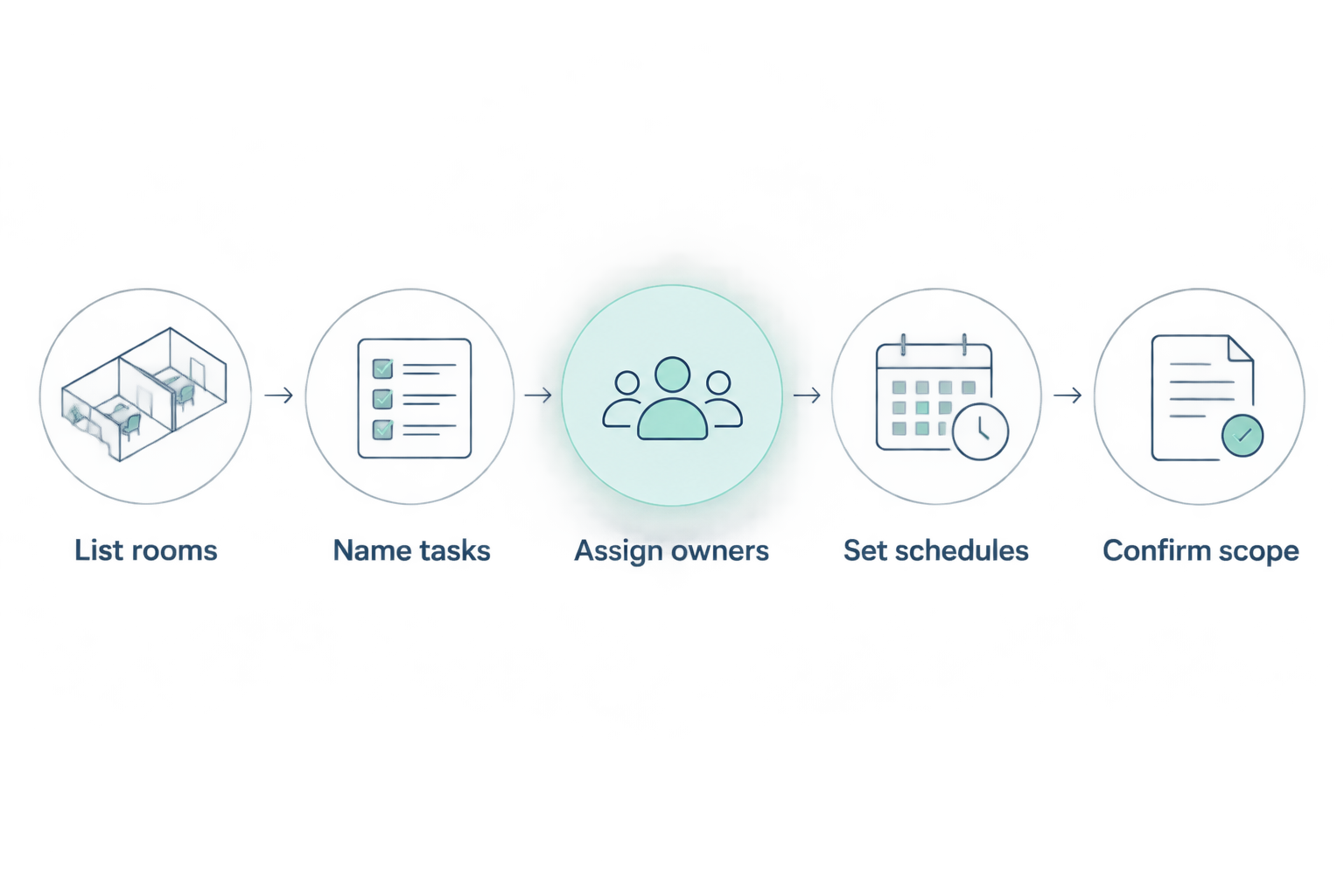
Agree on responsibilities and access before treating a checklist as a service commitment.
For an office, add building access instructions, occupied work periods, restricted rooms, and the person who answers questions. For a home, note pets, personal belongings, entry arrangements, and rooms you want excluded.
Request reliability in concrete terms: ask how scheduling, changes, and unfinished tasks are communicated. Ask about team training for your surfaces rather than assuming every material receives the same treatment.
How the checklist items were ranked
This 2026 ranking puts shared functional spaces first, then access-sensitive surfaces, then detail work. The criteria are task clarity, responsibility, scheduling, surface instructions, and checkable completion—not a comparison of cleaning companies.
Pureandcleancleaning provides house cleaning and commercial janitorial services; the checklist helps you describe either request without assuming particular tasks are included. Use the ranking to organize the conversation, not as a substitute for an agreed scope.
Which cleaning checklist should you choose?
Choose restroom cleaning as the default first priority, then add kitchen and entrance tasks. These areas give your office checklist a clear starting structure without treating every room alike.
For house cleaning in Tacoma, build a separate room-based list around your bathrooms, kitchen, living areas, and bedrooms. For commercial cleaning services in Tacoma, add shared facilities, workstations, access restrictions, and responsibility for supplies.
Send your room list, requested tasks, preferred schedule, and access notes when you request a quote. Ask for confirmation of what is included before booking your cleaning.
FAQ
What's the best commercial cleaning checklist for Tacoma offices?
The best commercial cleaning checklist for Tacoma offices names each task, its location, its proposed schedule, and its owner. Start with restrooms, shared kitchens, and entrance floors, then add workstation boundaries and detail tasks.
How often should an office be cleaned?
Set the office cleaning schedule according to room use, occupancy, visible debris, and the agreed service scope. Review shared restrooms and kitchens separately from less-used rooms instead of giving every space the same frequency.
Does office cleaning include washing dishes?
Do not assume office cleaning includes washing dishes. Identify who handles mugs, food containers, and other personal items, and confirm any dishwashing request before booking.
Should employees clear desks before cleaners arrive?
Employees should prepare desks according to the agreed handling rules. Identify which accessible surfaces need cleaning and whether papers, devices, and personal items must remain untouched.
Can I use an office cleaning checklist for my house?
Use the same planning principles, but create a separate house cleaning checklist. Residential rooms, personal belongings, pets, and entry arrangements need instructions that an office checklist does not cover.
What should I send when requesting cleaning services in Tacoma?
Send your property type, room list, requested tasks, preferred schedule, and access instructions. Include surface-care requirements, exclusions, and any questions about preparation or supplies.
Does a cleaning checklist guarantee disinfection?
A general cleaning checklist does not establish a disinfection service or guarantee a health outcome. Discuss any specific disinfection request separately and confirm the applicable scope and instructions.
One last thing
Write the exclusions before finalizing your 2026 checklist. A short note about unopened drawers, untouched papers, appliance interiors, or restricted rooms can settle expectations more clearly than another broad instruction to clean thoroughly.
For your next Pureandcleancleaning service request, bring both lists: what you want cleaned and what you want left alone. Confirm the scope, then book with clear expectations.